
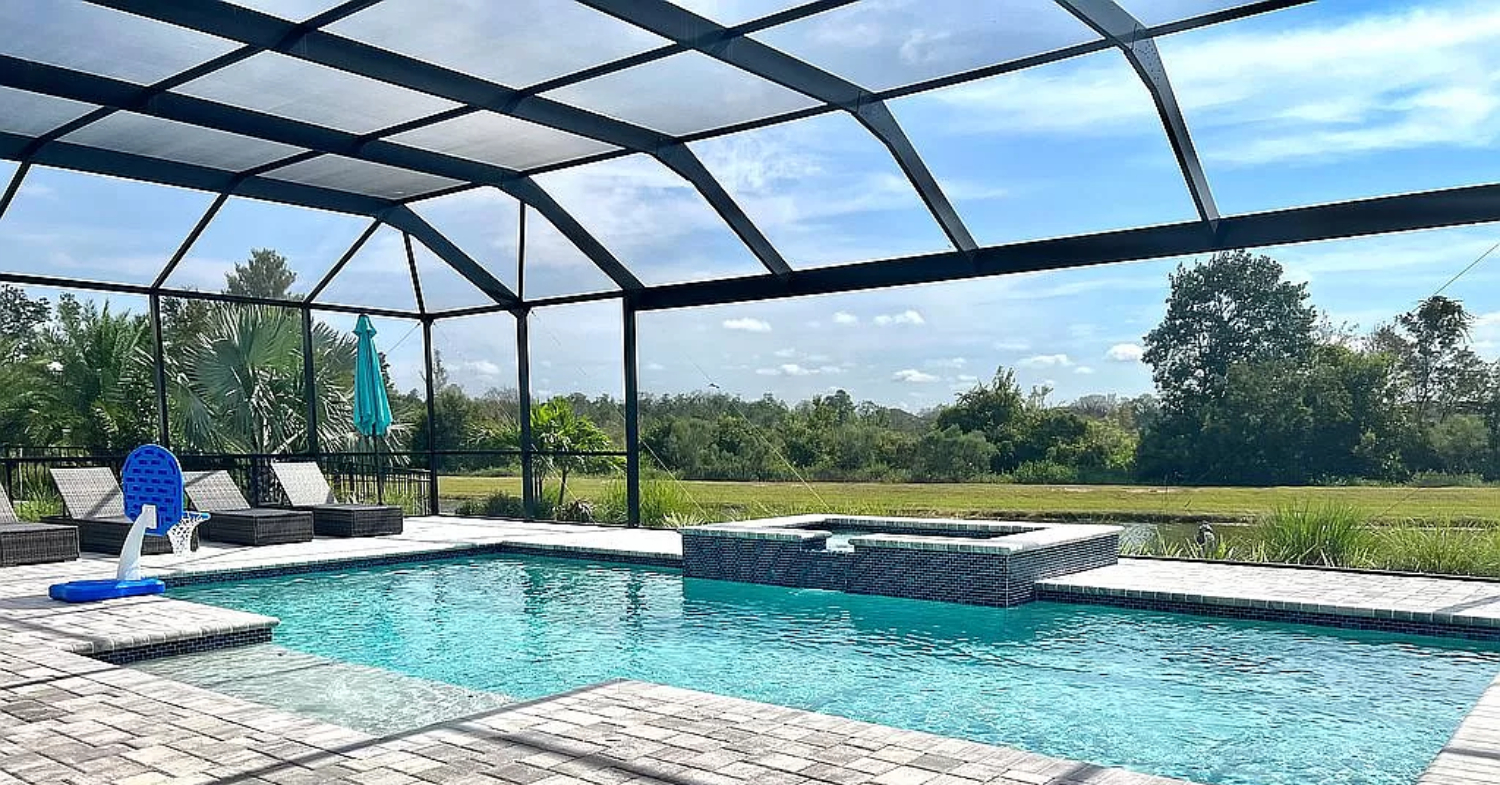
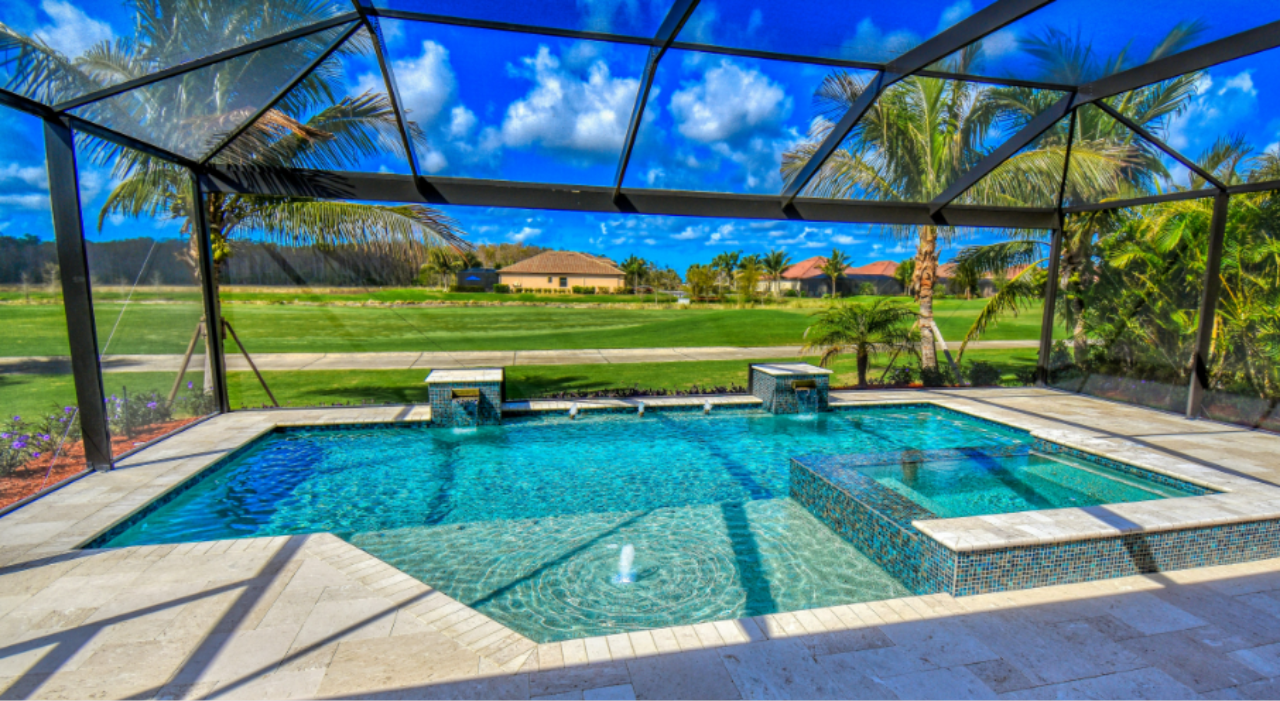
If you have ever visited Florida for the first time and driven through a residential neighborhood, you have almost certainly noticed something that sets these homes apart from houses almost anywhere else in the country. Nearly every backyard pool is surrounded by a large screened structure, an aluminum-framed cage enclosing the entire pool area in fine mesh screen. To someone from outside the state, it can look unusual. To anyone who has lived in Florida for more than a summer, it is one of the most practical features a home can have.
The question of why do Florida pools have cages has a straightforward answer and several layers beneath it. At Affordable Lanai, we have been installing pool screen enclosures across Hillsborough County and surrounding Florida communities for over 15 years. We have built more than 2,000 enclosures and talked through the decision with thousands of homeowners. This guide covers the real reasons Florida homeowners install pool cages, what they actually do for your family and your property, and why so many people who initially thought a pool enclosure was optional end up calling it one of the best investments they ever made.
The Bug Problem Is More Serious Than It Sounds
Florida is home to an extraordinary variety of biting insects, and the warm, humid conditions that make the state such a desirable place to live are exactly the conditions that mosquitoes, no-see-ums, and other insects thrive in. Swimming pool areas are particularly attractive to mosquitoes because of the standing water, the human activity, and the warmth generated by an exposed pool surface in direct sunlight. An evening pool session without an enclosure in most parts of Hillsborough County is, for much of the year, a genuine endurance test rather than the relaxing experience it should be.
A properly installed pool screen enclosure creates a physical barrier between your family and the insect population outside. The mesh screen used in quality enclosures allows airflow while blocking insects, including the smallest and most persistent species like no-see-ums that can pass through lower-quality screen products. At Affordable Lanai, we use durable, high-quality US-manufactured screen mesh specifically selected for its performance against Florida’s insect population. The result is a pool area where your family can actually relax without constantly slapping at their arms.
From screen enclosures to custom extensions, discover our full range of lanai services designed for outdoor living.
Debris and Pool Maintenance: A Practical Daily Benefit
Florida’s landscape includes an abundance of palm trees, oaks, and tropical plantings that shed leaves, seeds, pollen, and debris continuously throughout the year. An uncovered pool in a Florida backyard is a leaf collection system whether you want it to be or not. Skimming debris, running the pump longer, cleaning the filter more frequently, and dealing with algae growth that organic material accelerates in warm water all become regular demands of pool ownership without an enclosure.
A pool screen enclosure dramatically reduces the volume of debris reaching the pool surface. Less debris means less work for the filtration system, fewer chemicals required to maintain water balance, and less time spent on maintenance rather than on enjoying the water. Pool owners with enclosures consistently report that their pool requires significantly less chemical treatment and equipment maintenance than it did before the enclosure was installed. Over a five-year period, the savings on chemicals, equipment wear, and maintenance labor can represent a meaningful portion of the enclosure’s original cost.
Safety for Children and Pets
This is one of the most important and least discussed reasons why Florida pools have cages. A pool screen enclosure creates an additional physical barrier that significantly reduces the risk of unsupervised access to the pool, particularly for young children and pets. Florida law requires pool barriers as a condition of pool ownership, and a properly constructed pool enclosure with a self-closing, self-latching door satisfies the barrier requirement under Florida statute.
Beyond regulatory compliance, the real-world safety value of a pool enclosure is substantial. The aluminum frame and screen mesh create a structure that a toddler cannot easily climb or pass through, and the self-latching door mechanism adds a layer of protection that a low garden fence or childproof gate alone does not match. For families with young children or curious pets, the safety argument for a pool enclosure often outweighs every other consideration.
Sun Protection and Comfort
Florida’s sun is intense by any standard. UV index readings in Hillsborough County during summer regularly reach the extreme range, and extended unprotected sun exposure at poolside carries real health risks beyond sunburn. Pool screen enclosures do not block sunlight entirely, but they do filter a meaningful percentage of UV radiation, reducing the intensity of direct sun exposure for people spending extended time in or near the pool.
The shade created by the enclosure roof also makes the pool deck significantly more comfortable during the peak heat hours of the afternoon. Pool furniture, outdoor rugs, and cushions that would fade and deteriorate rapidly under direct Florida sun last considerably longer when protected by even the partial shading an enclosure provides. And the enclosure structure itself allows ceiling fans to be installed in the covered area, making outdoor entertaining genuinely comfortable even in the depths of July.
Curious about the investment? Use our interactive tool to calculate your lanai price based on your specific needs.
Hurricane and Storm Resistance
Florida’s hurricane season is a real factor in every outdoor structure decision. Affordable Lanai offers hurricane-resistant pool screen enclosure options specifically for homeowners who need the peace of mind that their enclosure will hold up under tropical storm and hurricane-force wind conditions. Standard screen enclosures are engineered to meet Florida Building Code wind load requirements, but for properties in the most exposed locations or for homeowners who want the highest level of storm resilience, upgraded hurricane-resistant screen and frame specifications are available.
Beyond full hurricane events, Florida’s afternoon thunderstorm pattern delivers intense, localized wind and rain events with remarkable regularity from June through September. An enclosure provides meaningful protection for the pool area, the surrounding furniture, and the pool equipment during these storms, reducing the cleanup and equipment check that a standard afternoon storm otherwise requires.
Property Value and Curb Appeal
In the Florida real estate market, a pool without a screen enclosure is notably less desirable than one with. Buyers who have lived in Florida understand the practical reality of insect exposure, debris management, and sun intensity, and a pool without an enclosure represents ongoing maintenance burden and comfort limitations that show up in how they value the property. Real estate agents across Hillsborough County and Tampa Bay consistently report that a pool screen enclosure is one of the outdoor features that most positively affects buyer response and offer price.
An enclosure also extends the functional season of the pool. While Florida pools are technically usable year-round, the comfort difference between a cool evening in November on an unenclosed pool deck versus a screened, sheltered pool patio is significant. An enclosure makes the pool area a genuinely year-round outdoor living space rather than just a summer feature.
What a Pool Screen Enclosure Installation Involves
Understanding the installation process answers the question of why Florida pools have cages from a practical construction perspective. A pool screen enclosure is not a simple structure. It is a permitted, engineered outdoor building that requires professional installation to perform correctly and comply with Florida Building Code.
At Affordable Lanai, we handle all permit acquisition for your project, which is one of the most practically valuable parts of our service. The installation follows a structured sequence: foundation assessment and preparation if needed, aluminum framework construction using high-quality US-manufactured materials in your choice of white or bronze, roof support installation to meet wind load requirements, gutter and drainage system installation, screen mesh installation across all walls and the roof, and a self-closing self-latching door system. A final inspection with the relevant authorities closes out the project and confirms code compliance.
Pool screen enclosure pricing at Affordable Lanai starts at $17,250 for a 20 by 30 foot enclosure, $19,600 for a 20 by 40 foot, $25,350 for a 25 by 40 foot, and $26,999 for a 30 by 40 foot. Our 10-year warranty on materials and one-year warranty on labor are among the strongest coverage commitments in the industry.
See how we are transforming backyards across the area by browsing our current jobs in progress.
Frequently Asked Questions
Are pool cages required by law in Florida?
Florida law requires that residential swimming pools be enclosed by a barrier that prevents unsupervised child access. A properly constructed pool screen enclosure with a self-closing, self-latching door satisfies this requirement under Florida statute 515. Other barrier types such as pool safety fencing or a compliant door alarm system can also satisfy the requirement, but a full pool enclosure is the most comprehensive solution and the one that simultaneously addresses safety, insect, debris, and sun protection needs.
How long does a pool screen enclosure last in Florida’s climate?
A quality pool screen enclosure installed with proper materials and to Florida Building Code specifications should last 15 to 30 years or more for the aluminum frame structure. The screen mesh itself typically needs to be re-screened every 7 to 15 years depending on exposure, screen material quality, and physical wear. Affordable Lanai backs our installations with a 10-year warranty on materials to reflect the confidence we have in the products we use.
Does a pool screen enclosure reduce evaporation?
Yes, meaningfully. A pool screen enclosure reduces wind exposure across the pool surface, which is the primary driver of water evaporation from outdoor pools. Reduced evaporation means less water needs to be added to maintain proper water level, less chemical loss, and more stable water chemistry. In Florida’s climate, the reduction in water and chemical consumption that an enclosure provides is a measurable ongoing savings.
What type of screen is best for a Florida pool enclosure?
Standard fiberglass or aluminum mesh in a tight weave pattern balances airflow with insect exclusion. For areas with very high no-see-um populations, a tighter 20 by 20 weave provides better insect exclusion at a modest reduction in airflow. For pool enclosures in hurricane-prone areas, heavier gauge aluminum screen or specialized hurricane-resistant screen fabric provides greater wind load resistance. A knowledgeable contractor can advise on which specification best fits your property’s exposure.
Can a pool screen enclosure be added to an existing pool on any property?
In most cases, yes. Pool screen enclosures can be added to existing pools as a retrofit installation. Key considerations include available space around the pool perimeter, the condition of the pool deck, local setback requirements, and permit requirements. An on-site evaluation determines the specific feasibility for a given property. Affordable Lanai provides free on-site estimates with a detailed assessment of what your specific installation requires.
The Investment That Pays Back in Every Florida Season
The answer to why do Florida pools have cages ultimately comes down to livability. A pool screen enclosure is what makes a Florida outdoor lifestyle actually sustainable in the face of insects, debris, sun intensity, and storm exposure that an unenclosed pool cannot comfortably manage. It is not a luxury addition. It is a practical, functional structure that makes a Florida pool genuinely usable every month of the year.
Affordable Lanai has been Hillsborough County’s trusted lanai and pool screen enclosure specialist for over 15 years, with a team whose members have a minimum of six years of individual installation experience. Our commitment to transparency, from our online build-and-price tool through our 24-hour estimate turnaround and step-by-step process documentation, means you understand exactly what you are getting before you commit to anything.
Contact Affordable Lanai today at (813) 777-5665 or visit affordablelanai.com to build and price your pool screen enclosure online. We serve Hillsborough, Manatee, and Polk County and are ready to help you create the bug-free pool area your family deserves.