
Table of Contents
The debate between a lanai vs screen enclosure comes up constantly for Florida homeowners planning an outdoor living upgrade — and it makes sense why. Both create protected outdoor spaces. Both keep bugs out. Both add value to your home. But they are not the same thing, and choosing the wrong one for your situation means spending money on features you didn’t need or missing out on benefits you actually wanted.
This guide breaks down exactly what separates a lanai vs screen enclosure, where each one makes the most sense, and how Hillsborough County homeowners can decide which direction genuinely fits their home, lifestyle, and budget.
What Is a Lanai?
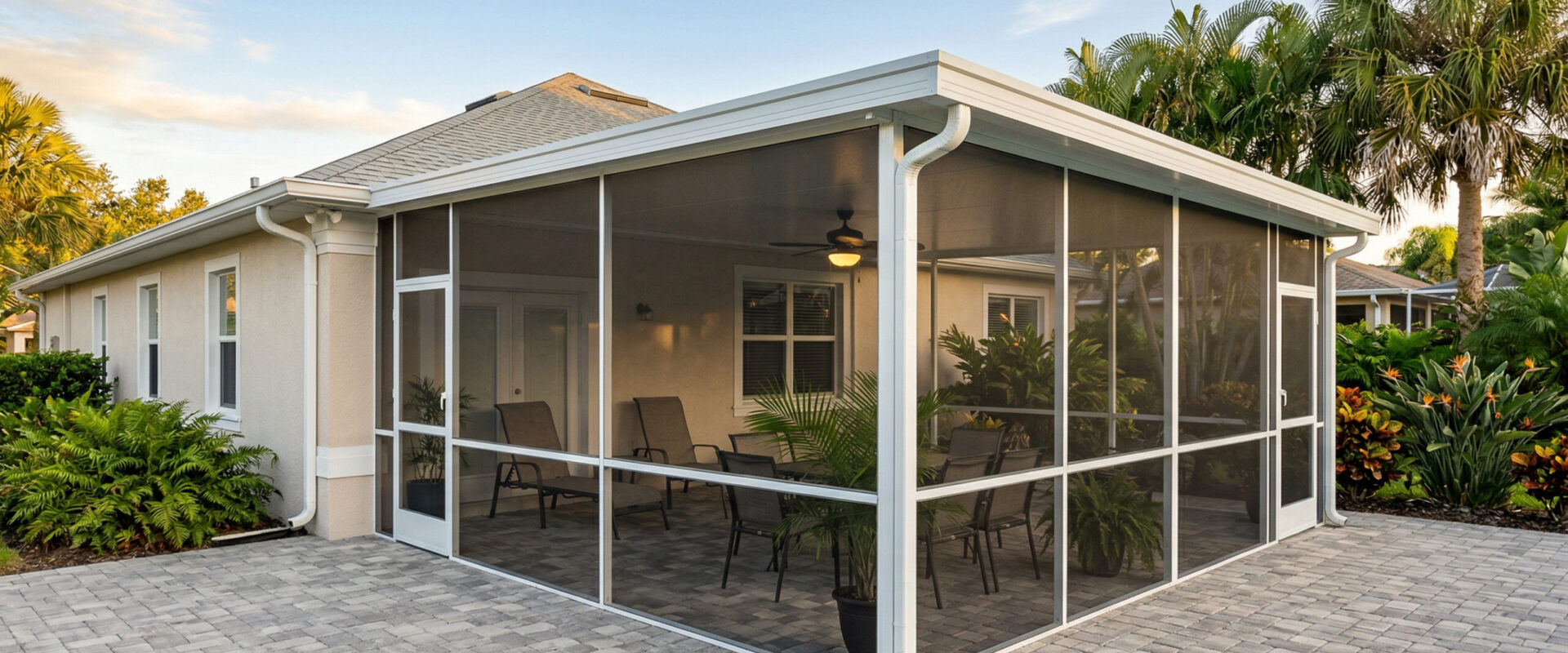
The word “lanai” comes from Hawaiian architecture and refers to a covered outdoor living space that functions as a true extension of the home. In Florida, the term has evolved to describe a covered patio area — typically with a solid or pan roof — attached directly to the back of the house with screen mesh walls on some or all sides.
Understanding what a lanai is forms the foundation of the lanai vs screen enclosure conversation, because in Florida the two terms are often used interchangeably even when they describe meaningfully different structures. A lanai in the Hillsborough County context usually includes a roof over the entire structure — either an aluminum pan, an insulated panel, or an extension of the home’s existing roofline — plus screen mesh perimeter walls, a finished paver or concrete floor, and direct interior access through sliding glass or French doors.
The result is an outdoor room that feels like part of the house. Florida homeowners use lanais for dining, entertaining, morning coffee, and as a comfortable transition zone between the air-conditioned interior and the open backyard. When people in Tampa Bay say they want to “enclose their lanai,” they typically mean adding a screen enclosure structure to an existing covered patio — which is where the comparison gets important.
What Is a Screen Enclosure?
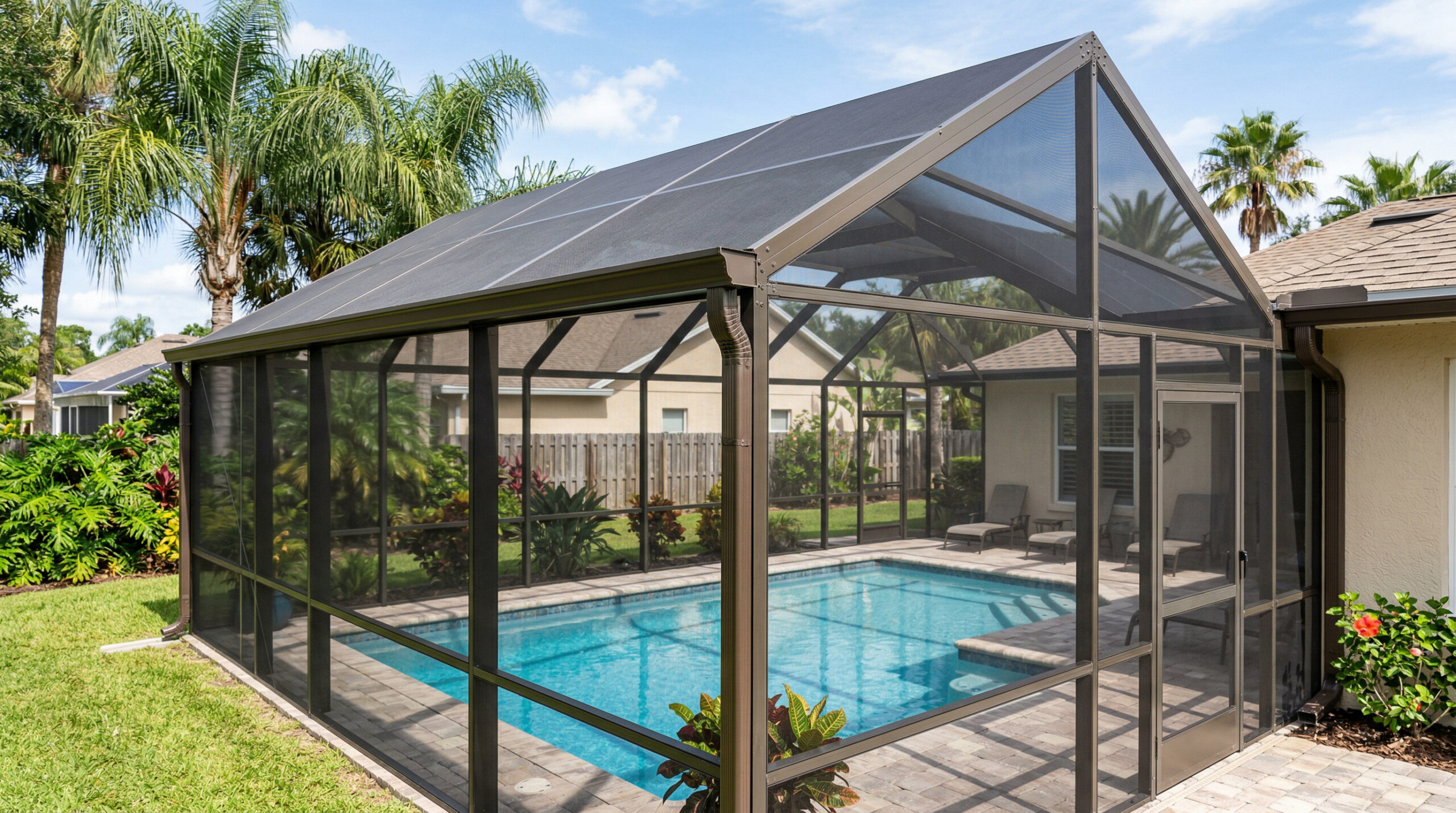
A screen enclosure is a freestanding or home-attached aluminum frame structure with screen mesh panels on the walls and roof. When comparing a lanai vs screen enclosure, this is the structure that offers more flexibility in terms of where it can be installed and what roof type it uses. Unlike a traditional lanai, a screen enclosure does not require a solid roof — the screen mesh itself can serve as the overhead covering, allowing airflow and natural light while keeping insects and debris out.
Screen enclosures in Hillsborough County are most commonly built over existing backyard pools, open patios without a roof structure, or existing lanai slabs where the homeowner wants to add full perimeter screening. Our lanai screen enclosures and pool screen enclosures both fall into this category — aluminum frame construction with charcoal screen mesh, designed for Florida’s climate and engineered to meet local building codes. The roof can be screen mesh, aluminum pan, or insulated panel depending on the homeowner’s goals and budget.
Lanai vs Screen Enclosure: 5 Key Differences That Actually Matter
When Florida homeowners weigh a lanai vs screen enclosure, these are the five distinctions that shape the real-world decision — not just the theory.
1. Lanai vs Screen Enclosure: Roof Structure
This is the most fundamental difference in the lanai vs screen enclosure comparison. A traditional lanai has a solid roof — aluminum pan, insulated panel, or an extension of the home’s existing roofline — that provides complete protection from rain regardless of how hard it falls. A screen enclosure can use a screen mesh roof instead, which maximizes airflow and natural light but leaves the space open to heavy Florida downpours. Homeowners who want to use their outdoor space through Tampa Bay’s daily summer storms should prioritize solid roof coverage regardless of which category they’re building in.
2. Architectural Integration
Lanais are typically designed as architectural extensions of the home — they match the existing roofline, use consistent materials, and feel like a permanent part of the structure from both inside and outside. Screen enclosures can be more modular and flexible, added onto existing patios or pools without requiring the same level of integration with the home’s design. If curb appeal and seamless exterior aesthetics matter to you, the lanai approach tends to deliver a more finished look.
3. Day-to-Day Weather Protection
In Florida, afternoon thunderstorms, year-round humidity, and hurricane season are not occasional concerns — they’re daily facts of life. A lanai with a solid pan or insulated roof keeps the interior completely dry in any rain and stays comfortable through Florida’s hottest months. A screen enclosure with a mesh roof offers excellent airflow and bug protection on clear days but is fully exposed to the elements during storms. Both structures are engineered to meet Florida wind-load requirements under the Florida Building Commission standards, but the solid roof delivers day-to-day weather comfort that a screen roof simply cannot.
4. Lanai vs Screen Enclosure Cost and Project Scope
The cost difference in a lanai vs screen enclosure project comes down primarily to the roof. A screen enclosure with a mesh roof is the most affordable starting point. Adding an aluminum pan roof increases the cost moderately. An insulated panel roof is the premium option. If you don’t yet have a concrete slab or paver patio, that’s an additional scope item — our team at Affordable Patio handles paver installation across Hillsborough County as part of complete outdoor living projects, coordinated alongside the screen enclosure for a single permit process and timeline. For approximate pricing on your specific configuration, use our Build & Price tool.
5. Lifestyle Fit and How You’ll Use the Space
The right answer in the lanai vs screen enclosure decision ultimately comes down to how you actually plan to use the space day to day. Homeowners who want a full outdoor dining and entertaining room that feels like a natural extension of their living space consistently gravitate toward a lanai with a solid roof. Homeowners who primarily want bug protection around a pool, or who love the open-air feel with maximum airflow, often prefer a screen enclosure with a mesh roof. Neither is objectively better — they serve different lifestyles, and the honest answer is whichever one matches how your family actually lives.
Choosing Between a Lanai vs Screen Enclosure for Your Florida Home
Here’s a straightforward way to think through the lanai vs screen enclosure decision for your specific situation without overthinking it.
Choose a lanai with a solid roof if you want the space to feel like a true room, you plan to use it year-round including during Florida rain, you want a seamless architectural look that matches your home’s exterior, or you’re furnishing the space for regular dining and entertaining with family and guests.
Choose a screen enclosure with a mesh roof if you primarily want protection around a pool, you love the open-sky feel and Florida breeze, you want the most affordable starting option, or you’re enclosing a space where staying dry during rain isn’t a daily priority.
The hybrid — and most popular — option in Hillsborough County is a screen enclosure with an aluminum pan roof. It delivers the bug protection and structural permanence of a screen enclosure with the full rain coverage and enclosed-room comfort of a lanai. It’s consistently the most requested configuration Affordable Lanai installs, and for most Tampa Bay homeowners it hits the right balance between cost, comfort, and usability.
If your project also involves driveway work or retaining walls on the property, our sister brands Affordable Driveway and Affordable Retaining Wall serve the same Hillsborough, Manatee, and Polk County area and can coordinate alongside your outdoor living project on the same schedule.
The best way to make the final call on a lanai vs screen enclosure is to look at your actual space with a licensed installer. Our free on-site evaluations include a written estimate within 12 to 24 hours — no pressure, no vague ballparks. Contact Affordable Lanai to schedule yours, explore configurations with our online Build & Price tool, or call us at (813) 777-5665. Financing is available through HFS Financial for qualified homeowners.
Frequently Asked Questions: Lanai vs Screen Enclosure
What is the difference between a lanai and a screen enclosure?
In the lanai vs screen enclosure comparison, the key difference is the roof. A lanai typically has a solid roof — aluminum pan or insulated panel — that provides full rain protection and feels like an architectural extension of the home. A screen enclosure can use a screen mesh roof instead, allowing more airflow and light but less weather protection. Both use aluminum framing and screen mesh walls, and both require building permits in Florida.
Which is more expensive — a lanai or a screen enclosure?
The cost difference in a lanai vs screen enclosure project comes down to roofing and whether a paver patio is needed. A screen enclosure with a mesh roof is the most affordable starting point. Adding a solid aluminum pan roof brings the cost up moderately. An insulated roof is the premium option. Use our Build & Price tool for approximate pricing on your specific size and configuration.
Does a lanai vs screen enclosure affect home resale value differently?
Both add genuine resale value in the Tampa Bay market — screened outdoor spaces are consistently among the most requested features by Florida homebuyers. A lanai with a solid roof and finished paver floor tends to make a stronger aesthetic impression on buyers. A pool screen enclosure is a practical selling point for homes with pools. Either way, a permitted, professionally installed structure adds more value than no enclosure at all.
Which option handles Florida weather better?
For year-round usability, a solid pan or insulated roof wins the lanai vs screen enclosure weather comparison. It keeps the space dry during afternoon thunderstorms and more comfortable during the hottest months. A screen mesh roof delivers superior airflow on clear days but leaves the space exposed to rain. If you want to use the outdoor space on Florida summer evenings — which come with a near-daily chance of storms — solid roof coverage makes the biggest practical difference.
Can I convert my existing patio into a lanai or screen enclosure?
Yes, in most cases. If you have an existing concrete slab or paver patio in good structural condition, a screen enclosure can be built directly on it. If you want a full lanai with a paver floor and don’t yet have one, Affordable Patio handles paver installation across Hillsborough County as part of a complete outdoor living project. Your existing slab gets evaluated during the free on-site visit.
Do I need a permit for a lanai or screen enclosure in Florida?
Yes. Both a lanai and a screen enclosure require a building permit in Florida. The permit process includes engineering review to verify the structure meets local wind-load requirements, which vary by county and proximity to the coast. Affordable Lanai manages the full permit process from application to final inspection — you don’t navigate the paperwork yourself.