
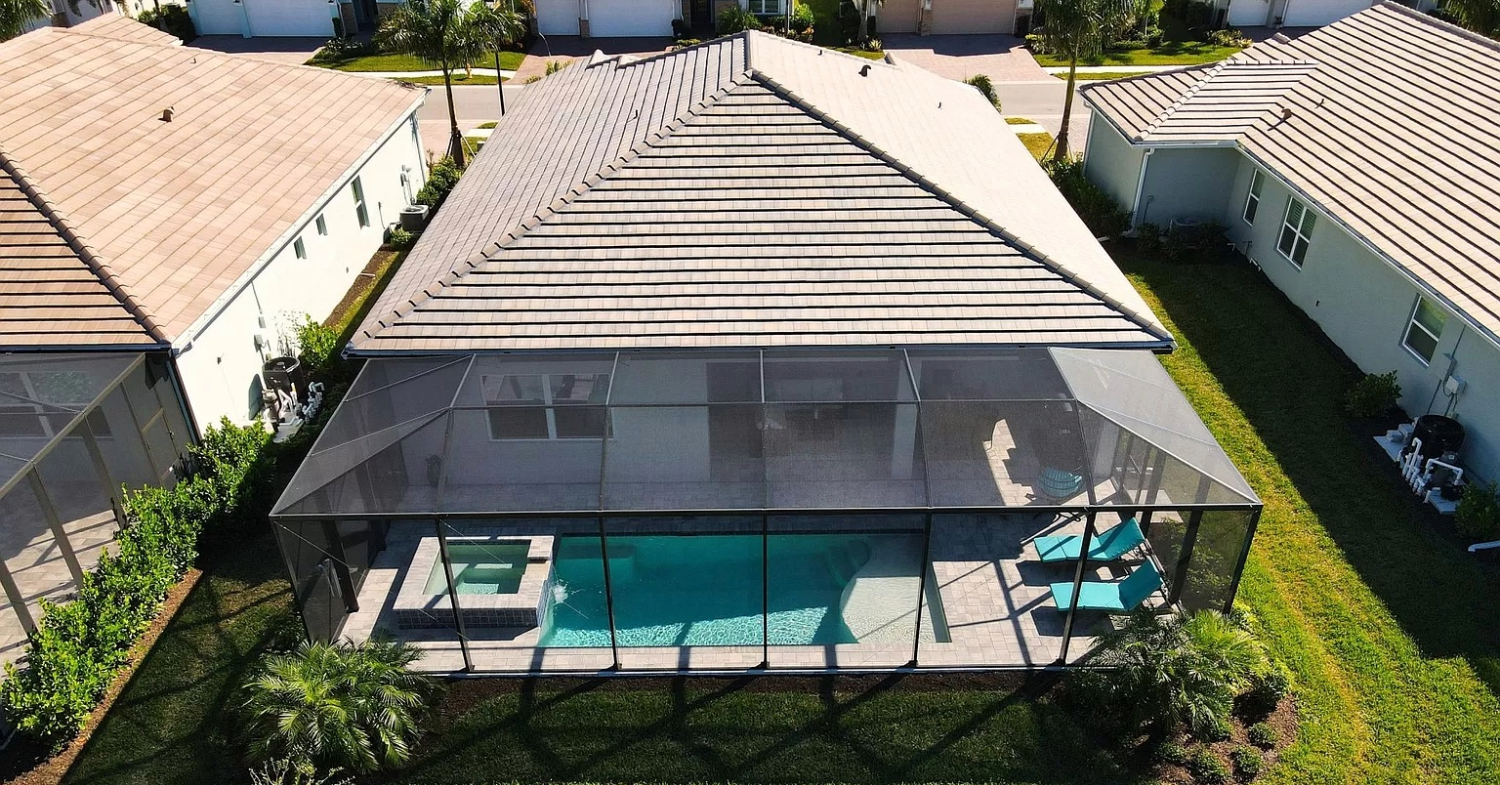
A pool screen enclosure is one of the most valuable functional features of a Florida home, and like any outdoor structure in this climate, it accumulates grime faster than most homeowners expect. Florida’s combination of high humidity, warm temperatures, afternoon rain, heavy pollen season, and proximity to organic matter creates conditions that accelerate the buildup of dirt, algae, mildew, and mineral deposits on screen mesh and aluminum frames. Left uncleaned, that buildup reduces airflow through the screen, dims the visual clarity of the enclosure, and can eventually contribute to screen degradation.
The challenge with knowing how to clean pool screen enclosure properly is that the screen mesh itself is more fragile than it looks. The wrong cleaning approach, using high pressure, abrasive tools, or harsh chemicals, can damage or distort the mesh, weaken it at the spline channels, or cause premature deterioration of the screen fiber. At Affordable Lanai, we have installed more than 2,000 screen enclosures across Hillsborough County and seen the results of both well-maintained and neglected systems. This step-by-step guide covers exactly how to clean your pool screen enclosure thoroughly without causing any damage.
What You Will Need Before You Start
- Garden hose with an adjustable spray nozzle
- Soft-bristle brush with a long handle
- Mild dish soap or a dedicated outdoor screen cleaning solution
- A bucket for mixing your cleaning solution
- White vinegar for mineral deposits or mildew spots if needed
- Optional: a soft cloth or sponge for the aluminum frame sections
What to avoid: pressure washers, wire brushes or stiff-bristle scrubbers, bleach-based products used directly on screen mesh, and any abrasive cleaning pads. These can distort or tear screen fibers, accelerate corrosion in the aluminum frame, or strip protective coatings.
We offer various mesh options and durable materials through our specialized enclosure services.
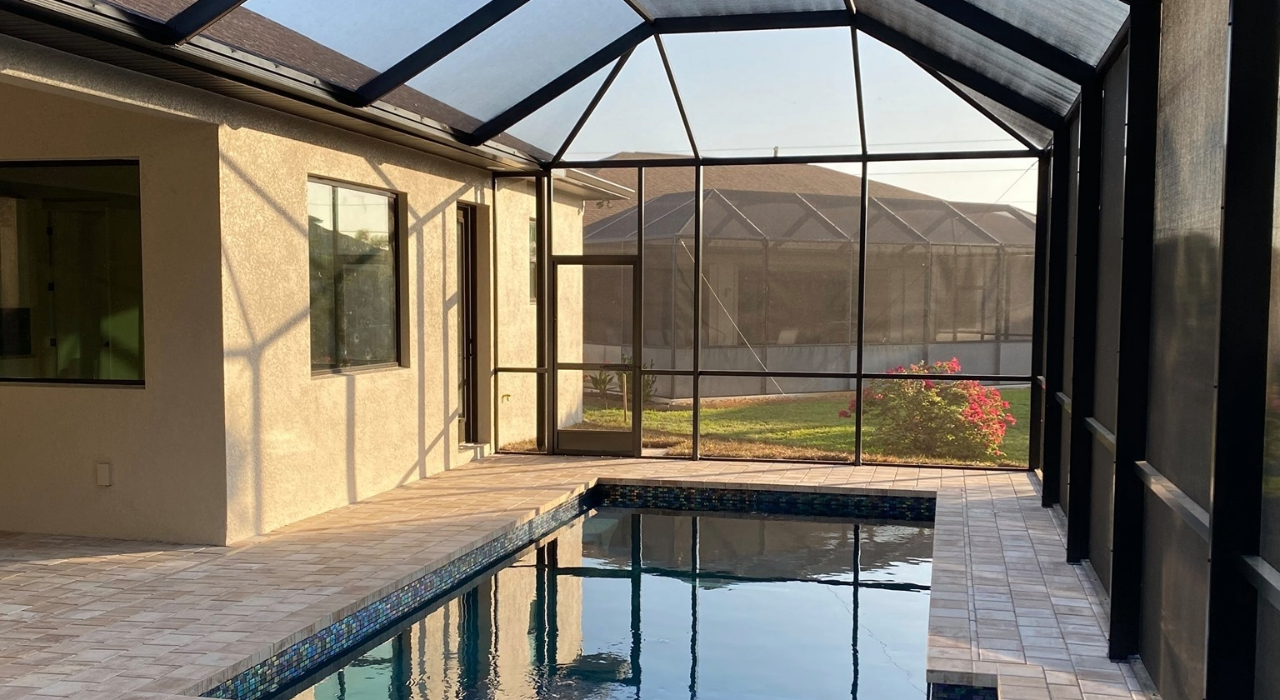
Step-by-Step: How to Clean Pool Screen Enclosure
Step 1: Rinse From Top to Bottom
Start with a thorough rinse of the entire enclosure using your garden hose set to a moderate, fan-shaped spray. Begin at the top and work downward so loosened debris and dirty water flow away from areas you have already rinsed. This initial rinse removes loose dirt, pollen, dried debris, and surface grime before any cleaning solution is applied. Pay particular attention to the areas where the screen meets the aluminum frame channels, as dirt and organic material tend to accumulate in these joints.
Step 2: Prepare Your Cleaning Solution
Mix a few drops of mild dish soap into a bucket of warm water, about one tablespoon per gallon. The solution should be lightly sudsy. Stronger concentrations are not more effective and can leave residue that attracts dirt faster after cleaning. If you are dealing with significant mildew or algae growth, a solution of one part white vinegar to three parts water is an effective natural treatment that will not damage screen fibers.
Step 3: Scrub the Screen Panels With a Soft Brush
Dip your soft-bristle brush into the cleaning solution and apply it to the screen panels using gentle, circular motions, working in sections from top to bottom. Apply enough pressure to work the solution into the mesh weave and loosen accumulated grime, but avoid aggressive scrubbing that pushes the mesh out of alignment. For the roof panels, a long-handled brush allows you to reach across the enclosure without putting weight on the screen itself. Never stand on or lean heavily against pool screen panels, as the screen mesh is not designed to bear body weight.
Stubborn green or black spots indicating algae or mildew growth may require the vinegar solution applied and allowed to sit for three to five minutes before scrubbing. The acetic acid in vinegar breaks down the biological growth effectively without damaging screen fibers.
Step 4: Clean the Aluminum Frame
While the soap solution is still wet on the screen panels, use a soft cloth or sponge to wipe down the aluminum frame members using the same mild soap solution. Pay particular attention to horizontal members where water sits after rain events. For oxidation on older aluminum frames, a product specifically designed for oxidized aluminum can restore some of the original finish, though this is a cosmetic rather than structural treatment.
Step 5: Rinse Thoroughly
After scrubbing, rinse the entire enclosure again from top to bottom. This is the most important step after the initial scrub. Any soap residue left on the screen will attract dirt and cause the screen to look dirty again much faster than a clean rinse would. Keep rinsing each panel until the water running off it is completely clear with no suds visible. For vinegar-treated areas, ensure these receive a particularly thorough rinse.
Step 6: Check the Pool Water Chemistry Afterward
After cleaning the enclosure, some cleaning solution and rinse water will inevitably enter the pool. Test your pool water chemistry after the cleaning session and adjust as needed. Mild soap in small quantities is not a significant pool chemistry concern, but it is good practice to confirm pH and chlorine levels are within normal range before the pool is used.
Different screen types can impact your total cost; build and price your project online to see the difference.
How Often Should You Clean a Pool Screen Enclosure?
In Hillsborough County’s climate, a pool screen enclosure benefits from a thorough cleaning two to four times per year. The spring pollen season is a particularly important time for a full cleaning. A second cleaning in late summer or early fall, after the rainy season, removes the biological growth that Florida’s humid summer accelerates.
In between full cleaning sessions, a light rinse with the garden hose once a month removes surface pollen and dust before it bonds to the screen fiber. This simple habit significantly reduces the effort required for each full cleaning session.
What Not to Do: Common Mistakes That Damage Screens
Do Not Use a Pressure Washer
This is the most common cleaning mistake that leads to screen damage. Even at low pressure settings, a pressure washer concentrates water force in a way that can push screen mesh out of the spline channels, distort the weave pattern, and create small tears that expand over time. Save the pressure washer for the pool deck concrete or pavers, not the screen panels.
Do Not Use Bleach Directly on Screen Mesh
Bleach can weaken screen fibers, accelerate corrosion at the frame channel, and damage surrounding surfaces including pool decking and plantings. In most cases, the vinegar solution is equally effective without the risk. If bleach is genuinely needed for severe biological growth, dilute it heavily and rinse immediately and thoroughly.
Do Not Scrub With Stiff or Wire Brushes
Stiff nylon or wire brush bristles can catch individual screen fibers and pull them out of alignment, creating weak points that tear under normal use or wind loading. Soft-bristle brushes produce perfectly adequate cleaning results without the fiber stress that causes premature wear.
When Cleaning Is Not Enough: Signs Your Screen Needs Repair
Knowing how to clean pool screen enclosure properly also means knowing when cleaning is no longer the right solution. If a screen panel has visible tears, holes, or areas where the mesh has pulled away from the spline channel, cleaning will not restore its function as an insect barrier. Small repairs can be made with screen patch kits, but larger damage or multiple panels showing wear typically warrant professional re-screening.
Affordable Lanai provides repair and re-screening services across Hillsborough County for enclosures of all ages. If your enclosure is more than 10 to 15 years old and showing widespread screen deterioration, a full re-screening with new high-quality US-manufactured mesh can restore the entire system to like-new performance at a fraction of the cost of a full new installation.
Get a closer look at the different materials we use by viewing our active job sites.
Frequently Asked Questions
Can I use a power washer on pool screen enclosure frames?
You can use a low-pressure washer setting on the aluminum frame members, but exercise caution near the screen panels. If using any pressurized washing equipment, keep the nozzle several feet away from the screen mesh and use a wide fan tip rather than a focused stream. The frame can tolerate moderate water pressure reasonably well, but the screen panels directly adjacent are at risk if the stream catches the edge of the mesh. Safer to stick with a garden hose for anything that includes screen contact.
What causes green stains on pool screen enclosures in Florida?
Green staining on pool screen enclosures in Florida is almost always algae or mildew growth. Florida’s warm, humid climate is ideal for these organisms, and moisture from pool splashing, rain, and morning dew creates exactly the conditions they need. Regular cleaning prevents green staining from becoming established, and the vinegar solution described in this guide is an effective treatment for staining that has already developed.
How do I remove calcium or mineral deposits from pool screen frames?
A solution of white vinegar and water applied directly to the affected area and allowed to sit for five to ten minutes before scrubbing gently with a soft brush and rinsing thoroughly is effective for dissolving mineral deposits. For heavy mineral buildup, a commercial lime scale remover formulated for outdoor use can be more effective than vinegar alone. Ensure any product used is safe near pool water before applying.
Is it safe to clean a pool screen enclosure while the pool is in use?
It is best to clean the enclosure when the pool is not in active use. Cleaning solution and rinse water will enter the pool during the process. Schedule the cleaning session for a time when the pool will be unused for a few hours, then test and adjust pool chemistry before swimming resumes.
How do I prevent mold and mildew from coming back quickly after cleaning?
The most effective prevention strategy is regular light rinsing between full cleaning sessions, which removes pollen and organic debris before it bonds to screen fiber. Ensuring that gutters and downspouts in the enclosure are clear prevents standing water from accumulating at panel bases, where mildew establishes most readily. Trimming plants close to the enclosure perimeter also reduces the organic material that deposits on the screen. A light application of a mildew-resistant outdoor spray formulated for screen enclosures after cleaning can help extend the time between recurrences.
A Clean Enclosure Is a Long-Lasting Enclosure
Knowing how to clean a pool screen enclosure correctly is one of the most valuable pieces of maintenance knowledge a Florida pool owner can have. A well-maintained enclosure looks sharp, performs its insect and debris barrier function consistently, and lasts significantly longer than one that has been neglected or cleaned with damaging methods.
Affordable Lanai has been Hillsborough County’s trusted pool and lanai screen enclosure specialist for over 15 years, using high-quality US-manufactured aluminum and screen materials backed by a 10-year material warranty. If your enclosure needs repair, re-screening, or if you are ready to add a new pool screen enclosure to your property, our team is ready to help.
Contact Affordable Lanai today at (813) 777-5665 or visit affordablelanai.com to get a free estimate. We serve Hillsborough, Manatee, and Polk County and are here to keep your outdoor living space looking and working at its best.