
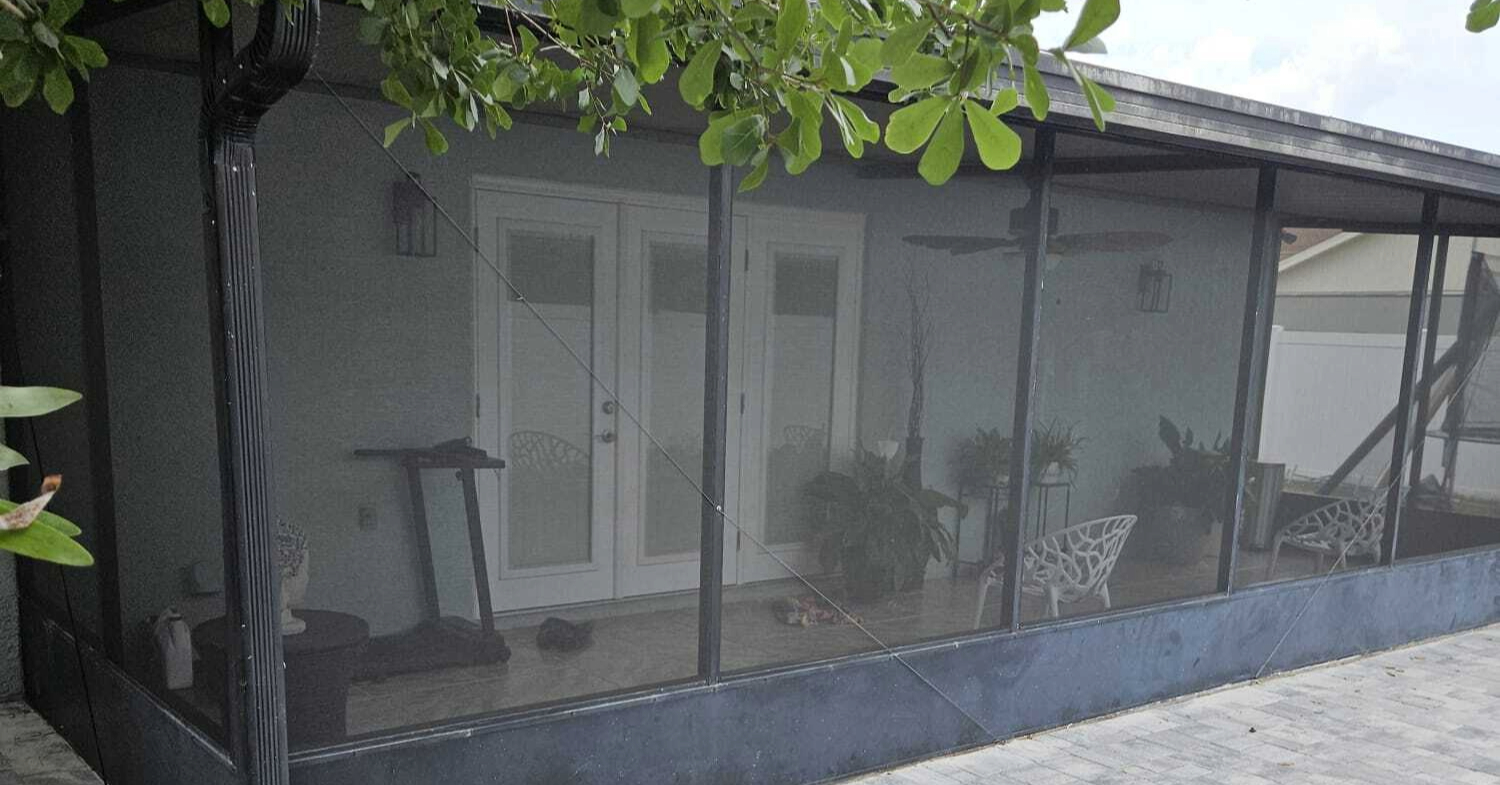
Lanai enclosure ideas can turn a basic screened patio into one of the most useful spaces in a Florida home. A lanai should do more than keep mosquitoes away. It should help control sun, support airflow, create privacy, protect furniture, connect to the pool or patio, and make the outdoor area comfortable enough to use through more of the year.
In Hillsborough County, lanai enclosure ideas should also account for heat, humidity, no-see-ums, afternoon storms, hurricane season, and HOA requirements. The right design can make a lanai feel like a true outdoor room instead of a simple screened slab. This guide covers practical lanai enclosure ideas that improve comfort, function, appearance, and long-term value.
Quick Answer
The best lanai enclosure ideas for Florida homes include no-see-um screen, solar screen on sun-facing panels, privacy screen panels, paver flooring, gable roof designs, ceiling fans, integrated lighting, double doors, pool-wrap layouts, and hurricane-resistant screen or framing. The strongest designs combine comfort, airflow, shade, privacy, and storm readiness.
Upgrade the Screen Material
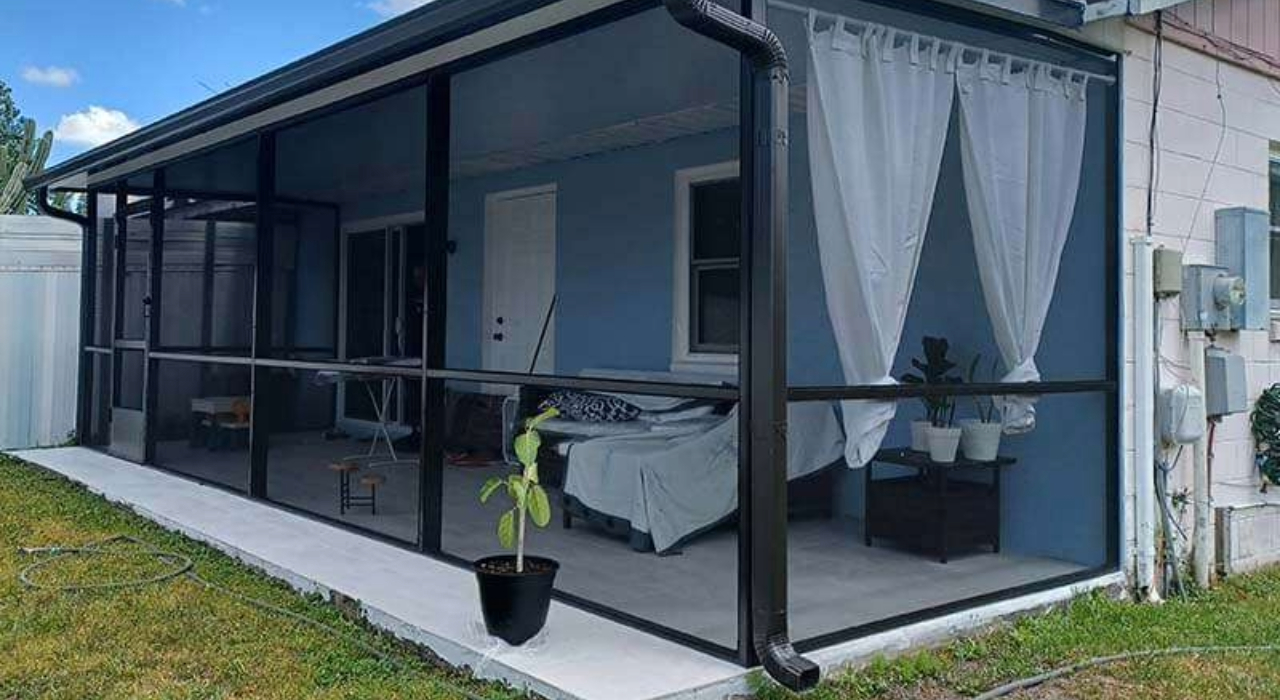
One of the most important lanai enclosure ideas is choosing better screen material. Many homeowners think all screen is the same, but screen choice affects daily comfort. Standard screen can block mosquitoes and larger insects, but it may not stop no-see-ums. It also may not reduce heat, glare, or privacy concerns.
Better lanai enclosure ideas start by matching screen material to the problem. If insects are the biggest issue, no-see-um screen may be the right choice. If heat is the problem, solar screen may help. If privacy matters, solar screen or solid lower panels can be used on exposed sides.
Screen upgrades do not have to cover the entire enclosure. Many homes use different materials on different sides. This keeps the lanai comfortable without making it too dark or reducing airflow everywhere.
Use No-See-Um Screen for Better Bug Control
No-see-um screen is one of the best lanai enclosure ideas for Florida homes near water, trees, or heavy insect areas. Standard screen can stop mosquitoes but may let tiny biting insects through. That can make the lanai uncomfortable even when the enclosure looks complete.
No-see-um screen uses a tighter mesh to block smaller insects. It is especially useful in the evening, after rain, and during warmer months when insects are more active. For many homeowners, this upgrade makes the lanai feel much more dependable.
The trade-off is airflow. Tighter mesh allows less breeze than standard screen. Still, many homeowners choose it because better insect control makes the space more usable. Among lanai enclosure ideas, this is one of the most practical upgrades for daily comfort.
Add Solar Screen on Hot Panels
Solar screen is another one of the strongest lanai enclosure ideas for Florida heat. It blocks sunlight, glare, and UV exposure. This can make the lanai more comfortable during hot afternoons and can help protect outdoor furniture, cushions, rugs, and flooring.
The best use is usually targeted. Solar screen can be installed on west-facing or southwest-facing panels where afternoon sun is strongest. The rest of the lanai can use no-see-um or standard screen to preserve airflow and visibility.
Solar screen can also add privacy during the day. It becomes harder for neighbors to see into the space while the homeowner can still see out. For lanai enclosure ideas that improve both privacy and comfort, solar screen is a strong option.
Plan Privacy Screen Panels
Privacy is one of the most requested lanai enclosure ideas in Hillsborough County. Many homes have close neighbors, visible backyards, or second-story views nearby. A lanai may be screened, but standard screen does not create much privacy.
Privacy screen panels can be added where needed. Solar screen works well for daytime privacy. Solid aluminum lower panels can block views at seating height. Decorative lattice can add partial privacy with a more detailed look.
The key is not to cover every side unless needed. Too much privacy screen can make the space darker and reduce airflow. The best lanai enclosure ideas use privacy materials only on exposed sides while keeping open-view panels lighter.
Use Paver Flooring for a Finished Look
Paver flooring is one of the lanai enclosure ideas that can make the biggest visual difference. A plain concrete slab may work, but pavers make the space feel more finished, warmer, and connected to the rest of the backyard.
Pavers can match or complement a pool deck, patio, walkway, or outdoor kitchen area. They also offer color, texture, and pattern choices that concrete does not provide. If the lanai is used for seating, dining, or entertaining, paver flooring can make the space feel more like an outdoor room.
Planning paver flooring with the enclosure is better than adding it later. Door locations, drainage, furniture zones, and transitions can all work together from the beginning. Affordable Lanai offers paver patio design and installation along with lanai and pool screen enclosure services.
Choose the Right Roof Style
Roof style affects how the lanai feels. A gable roof creates more height and a more open interior. It can help hot air rise and make the space feel larger. A mansard roof is also common in Florida and may fit certain pool or patio layouts better.
Lanai enclosure ideas should consider the home’s roofline, the size of the patio, HOA rules, budget, and desired appearance. A taller roof can feel more open, while a lower roof may be more budget-friendly.
Roof style also affects airflow, shade, and the way the enclosure connects to the home. A good design should look intentional, not like an afterthought.
Add Ceiling Fans
Ceiling fans are one of the highest-value lanai enclosure ideas for Florida humidity. Moving air can make the space feel more comfortable even when temperatures are high. Fans help during meals, relaxing, reading, and evening use.
Fans should be planned before installation when possible. The enclosure needs proper mounting support and electrical planning. Adding fans later can be more difficult and may require visible conduit or extra work.
Outdoor-rated fans are important because lanais deal with humidity, temperature changes, and moisture. A qualified professional should handle electrical work.
Add Integrated Lighting
Lighting is one of the lanai enclosure ideas that makes the space useful after sunset. Without lighting, the lanai may become a daytime-only area. With lighting, it can support dinners, conversations, pool use, and evening relaxation.
Lighting options include ceiling fixtures, beam-mounted lights, string lights, wall lights, and accent lighting near seating areas. The right choice depends on how the space will be used.
Electrical planning should happen early. Fixture locations, switches, and wiring should be considered before the frame is finished. Good lighting makes the lanai feel safer and more complete.
Use Double Doors for Better Access
Double doors are simple lanai enclosure ideas that improve daily use. A standard screen door may be enough for walking in and out, but it can be limiting when moving furniture, grills, plants, pool equipment, or large decor items.
Double doors create better flow between the lanai and backyard. They also make the space feel more open during gatherings. For homes where the lanai connects to a pool deck, patio, or outdoor kitchen, double doors can make a big difference.
It is easier to plan double doors during the design phase than to modify the opening later. Door placement should match the way people move through the space.
Extend the Lanai Around the Pool
One of the most useful lanai enclosure ideas is extending the enclosure around the pool. Instead of having a small screened patio and an open pool area, a pool-wrap enclosure creates one complete outdoor living zone.
This design reduces bugs, leaves, and debris around the pool. It also connects seating, swimming, dining, and relaxing areas. Families that use the pool often may find this layout much more practical.
A pool-wrap enclosure should be planned around doors, screen material, roof style, drainage, and pool equipment access. If the pool gets strong sun, solar screen may help. If insects are the issue, no-see-um screen may be the better baseline.
Plan for Storm Resistance
For storm-related materials and enclosure products, homeowners can use Florida Building Code Online to review approved construction products under the current Florida Building Code. Search Florida Building Code product approvals when comparing materials for a permitted lanai or pool enclosure project.
Storm readiness should be part of lanai enclosure ideas in Florida. Hillsborough County can experience tropical storms, high winds, and hurricane-season weather. Stronger materials can reduce repair needs and provide more confidence.
Hurricane-rated screen, quality anchors, proper fasteners, and US-made aluminum framing can support better performance. The screen alone is not the whole answer. The full enclosure system needs to be properly designed and permitted.
Homeowners should ask what materials are being used, whether permits are included, and how the enclosure meets local wind-load requirements.
Combining the Best Ideas
The best lanai enclosure ideas usually work together. A homeowner focused on heat may combine solar screen, fans, and a taller roof. A homeowner focused on bugs may choose no-see-um screen and tight-fitting doors. A homeowner focused on privacy may use solar screen, solid lower panels, and landscaping.
| Goal | Best Ideas to Combine |
|---|---|
| Better summer comfort | Solar screen, ceiling fans, taller roof style |
| Better bug protection | No-see-um screen, tight doors, proper panel design |
| More privacy | Solar screen, solid lower panels, landscaping |
| Finished room feel | Paver flooring, lighting, fans, double doors |
| Storm readiness | Hurricane-rated screen, US-made aluminum framing, permits |
How Affordable Lanai Helps
Affordable Lanai helps homeowners turn lanai enclosure ideas into practical designs that fit Florida homes. The team reviews the patio, pool area, sun exposure, wind direction, privacy needs, screen options, and HOA concerns before recommending a layout.
Affordable Lanai is powered by American Home Center, License SCC131153480. The company uses US-made materials, handles permits, and offers warranty-backed lanai screen enclosures, pool enclosures, rescreening, carports, and paver patio design.
To start planning, visit the Affordable Lanai contact page.
Frequently Asked Questions
What are the best lanai enclosure ideas for Florida heat?
Solar screen, ceiling fans, taller roof styles, and light-colored paver flooring can all help make a Florida lanai more comfortable in hot weather.
What screen is best for a lanai enclosure?
No-see-um screen is often best for insect-heavy areas, while solar screen is better for heat and privacy. Many homes use both.
Can ceiling fans be added to a lanai enclosure?
Yes, but fans should be planned early so the framing, mounting points, and electrical work can be handled correctly.
Do lanai enclosures need permits?
Yes, lanai screen enclosures generally require permits. Affordable Lanai handles permit coordination as part of the project process.
Can a lanai connect to a pool enclosure?
Yes. Many homeowners connect the lanai and pool area into one screened outdoor living space for better comfort and cleaner use.
Conclusion
Lanai enclosure ideas should make the space more comfortable, private, durable, and useful. No-see-um screen, solar screen, paver flooring, fans, lighting, double doors, pool-wrap layouts, privacy panels, and hurricane-resistant upgrades can all improve the finished result.
Affordable Lanai helps Florida homeowners design and build lanai enclosures that fit the home, climate, and daily use. To request your estimate, visit the contact page or call (813) 777-5665.