
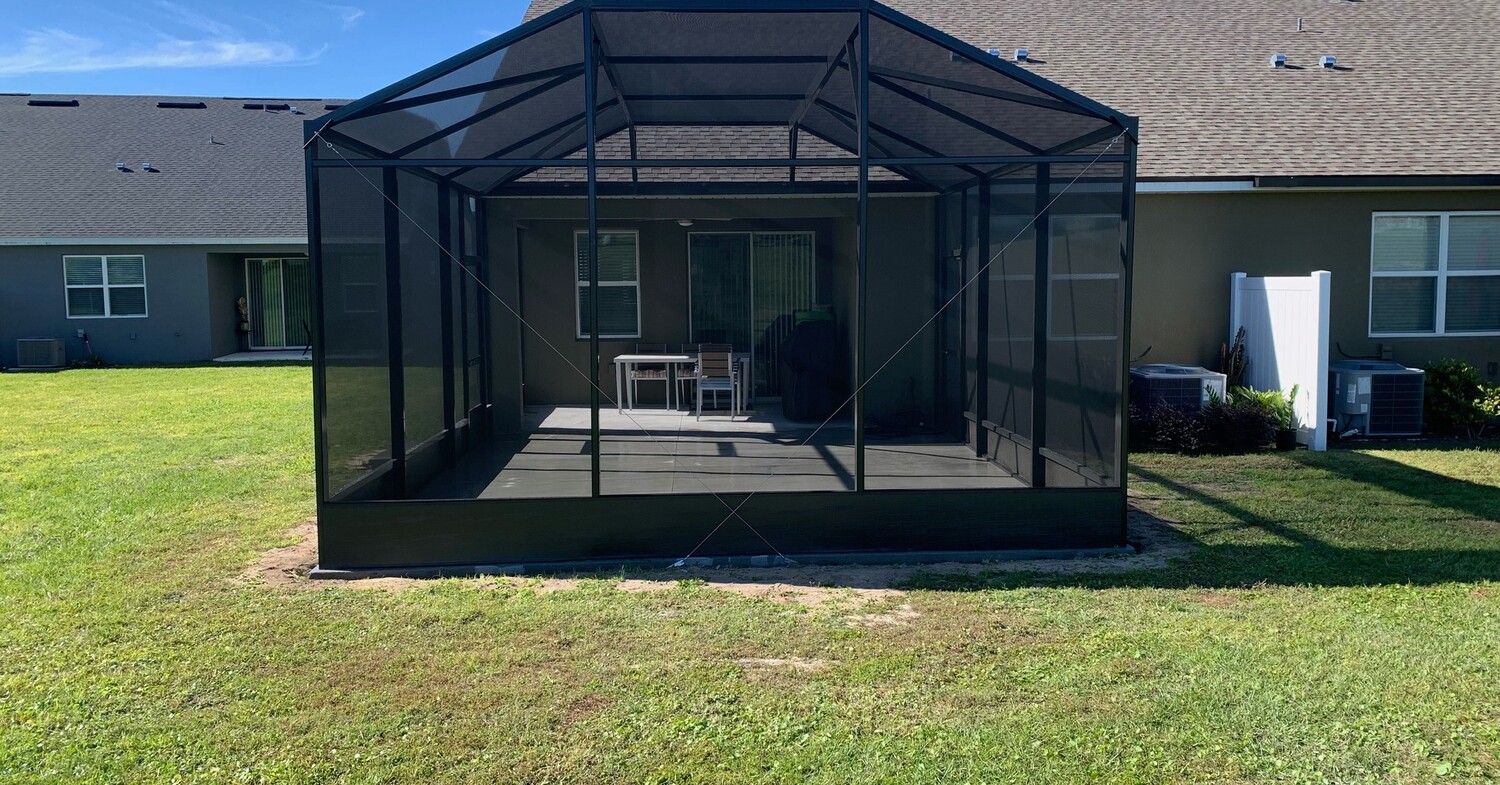
Every Florida homeowner faces the same outdoor living question at some point. Should you invest in a screen enclosure vs open patio Florida style, or is an open-air setup good enough for the way you actually use the space? The answer depends on your lifestyle, your budget, and how much time you want to spend maintaining your outdoor area instead of enjoying it.
Florida weather is beautiful but demanding. Mosquitoes, no-see-ums, summer rain, and intense UV exposure make outdoor living more complicated than it looks on the real estate listing photos. Understanding the real differences between a screen enclosure vs open patio Florida homeowners deal with helps you make the right decision for your home and family.
A screen enclosure vs open patio Florida comparison comes down to bug protection, maintenance, and usable hours. Screen enclosures cost $5,000 to $20,000 but eliminate mosquitoes, reduce debris cleanup by 80 percent or more, and let you use your outdoor space comfortably year-round. Open patios cost less upfront but require more maintenance and limit comfortable use during bug-heavy months from May through October.
Table of Contents
- Why the Screen Enclosure vs Open Patio Debate Matters in Florida
- Bug Protection and Comfort Differences
- Maintenance and Cleaning Compared
- Cost Comparison for Florida Homeowners
- Weather Protection and Year-Round Use
- Property Value Impact in Florida Markets
- Safety Benefits of Screen Enclosures
- Design and Aesthetic Options
- Frequently Asked Questions
- Conclusion
Why the Screen Enclosure vs Open Patio Debate Matters in Florida
In states with mild bug populations and dry climates, an open patio is perfectly fine for everyday outdoor living. Florida is not one of those states. The combination of tropical humidity, standing water from afternoon rainstorms, and warm temperatures year-round creates one of the most aggressive mosquito environments in the country. This single factor makes the screen enclosure vs open patio Florida decision more consequential here than almost anywhere else.
Beyond mosquitoes, Florida homeowners deal with no-see-ums near the coast, love bugs twice a year, and a variety of other flying insects that make open-air dining and relaxation uncomfortable during peak months. A screened patio Florida families actually use stays comfortable even in July and August evenings. An open patio in Tampa Bay during those months often sits empty because the bug pressure is simply too high. A screened lanai vs open patio setup changes that equation completely.
There is also the matter of falling debris. Florida’s lush tropical landscaping drops leaves, flowers, seed pods, and small branches constantly. An open patio collects all of this, requiring regular sweeping and blowing. A screen enclosure vs open patio Florida setup catches the large debris on the roof screen while keeping the living area underneath significantly cleaner with less effort.
Bug Protection and Comfort Differences
The biggest practical advantage of a screen enclosure vs open patio Florida living is insect control. A properly installed screen enclosure with 18 by 14 mesh eliminates mosquitoes, wasps, flies, and most other flying insects from your outdoor space. You can eat dinner, watch a movie, or have a party on your screened lanai without applying bug spray, lighting citronella candles, or constantly swatting.
Open patios offer none of this protection. Bug zappers, tiki torches, and spray treatments provide partial relief, but none of them come close to the complete barrier a screened patio Florida homeowners enjoy. Many families who start with an open patio end up adding a screen enclosure within a few years because the bug situation makes their outdoor space unusable during the warmest months when they want to use it most. The screened lanai vs open patio comfort difference is especially noticeable at dusk when mosquitoes are most active.
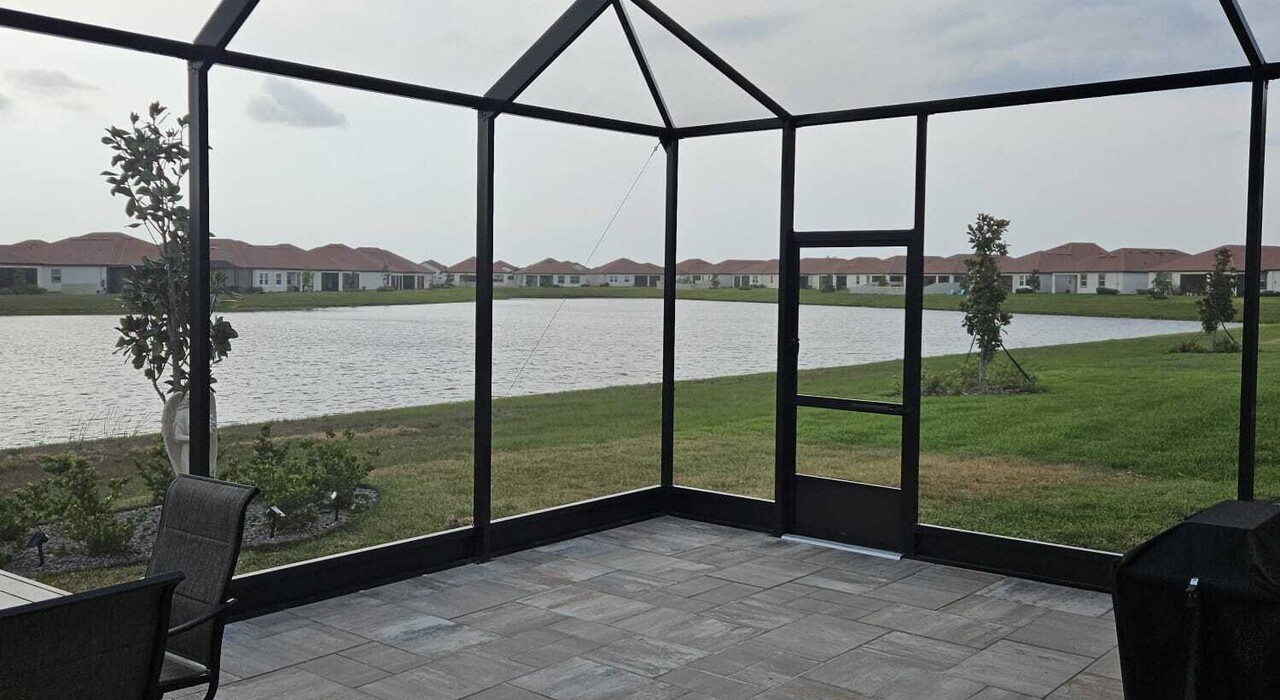
Comfort extends beyond bugs. A screened lanai enclosure also blocks pollen, which matters for allergy sufferers in Florida where pollen seasons are long and intense. It keeps out small wildlife like lizards, frogs, and tree-dwelling insects that commonly wander onto open patios. And it provides a psychological sense of enclosure that makes the space feel more like a room, encouraging homeowners to furnish and decorate it as a true extension of their indoor living area.
Maintenance and Cleaning Compared
Maintenance is one area where the screen enclosure vs open patio Florida comparison shows clear differences. An open patio requires frequent cleaning because everything that falls from the sky, blows in the wind, or gets tracked in by foot traffic lands directly on the surface. In Florida, this includes daily leaf drop from palms and oaks, pollen coating during spring, mildew growth from humidity, and staining from rain-splashed mulch and soil.
Most open patio owners in Florida sweep or blow their patio two to three times per week during peak leaf season and pressure wash the surface every few months to keep mildew and staining under control. Over the course of a year, the screened lanai vs open patio maintenance gap adds up to significant time and effort saved for those who choose the enclosure.
A screen enclosure reduces surface maintenance by 70 to 80 percent. The screen roof catches leaves and large debris, which slide off or dry up and blow away. Rain still reaches the patio surface in most screen enclosure designs with screen roofs, so the concrete or pavers stay naturally rinsed. The screen itself needs periodic cleaning with a hose or low-pressure wash once or twice a year, and the frame should be inspected annually for signs of corrosion or loose fasteners.
When you factor in the time savings over five to ten years, the reduced maintenance of a screen enclosure vs open patio Florida homes deal with often justifies a significant portion of the installation cost. Homeowners consistently report spending fewer weekend hours on outdoor cleanup after adding a screen enclosure. You can learn more about the installation process to understand what the transition involves.
Cost Comparison for Florida Homeowners
An open patio with a concrete slab or paver surface typically costs $3,000 to $12,000 depending on size, materials, and whether any grading or drainage work is needed. This gets you a usable outdoor surface but no overhead protection or insect barriers.
Adding a screen enclosure to an existing patio costs $5,000 to $20,000 depending on size, height, roof type, and materials. A basic screen enclosure for a 12 by 20 foot patio starts around $5,000. A larger enclosure for a 20 by 40 foot pool and patio area with a combination screen and pan roof can reach $15,000 to $20,000 or more.
The total cost of a screened patio Florida project, including the slab and enclosure, typically runs $8,000 to $30,000. This is more than an open patio alone, but the comparison is not apples to apples. A screened patio is usable 12 months per year in Florida. An open patio in most parts of the state is uncomfortable four to six months per year during peak bug and rain season. When you calculate cost per usable hour, a screen enclosure vs open patio Florida investment often delivers better value in the screened lanai vs open patio debate.
There are also ongoing cost differences in the screen enclosure vs open patio Florida equation. Open patios tend to need furniture replaced more frequently because cushions, fabrics, and metal frames degrade faster in direct sun and rain. A screened patio Florida homeowners maintain protects furniture from the worst UV exposure and keeps cushions dry during afternoon showers, extending their lifespan by two to three times. The savings on furniture replacement alone can offset a meaningful portion of the enclosure cost over its lifetime.
Weather Protection and Year-Round Use
Florida’s weather patterns create specific challenges that affect how much you actually use your outdoor space. From June through September, afternoon thunderstorms roll through almost daily. These storms can dump heavy rain for 30 to 60 minutes before clearing out. An open patio is completely exposed to these events, which means moving furniture, drying surfaces, and dealing with standing water.
A screen enclosure with a partial pan roof gives you protection from direct rain in at least part of the space. Some enclosure designs use solid roof sections over the dining or seating area with screen roof panels over the open pool or yard section. This hybrid approach lets you enjoy the outdoor feeling while staying dry during afternoon showers. When comparing a screen enclosure vs open patio Florida weather protection, the enclosure wins in every category.
UV protection is another factor. Florida ranks among the highest UV index states in the country, and prolonged exposure on an open patio without shade increases skin cancer risk. A screen enclosure reduces UV transmission by 20 to 30 percent even with a screen roof. Models with solid pan roof sections block UV entirely in those areas. This protection matters for families who spend hours outdoors on their pool screen enclosure or lanai.
Wind is less of an issue for screen enclosures than many homeowners expect. Modern screen enclosures in Florida are engineered to meet building code wind load requirements, which means they handle normal wind conditions and most tropical storms without damage. Screen panels allow wind to pass through rather than creating a sail effect, which actually gives them an advantage over solid-wall structures in high winds.
Property Value Impact in Florida Markets
Real estate data consistently shows that screen enclosures add measurable value to Florida homes. In the Tampa Bay market, a well-maintained screen enclosure typically adds $10,000 to $25,000 to a home’s sale price depending on size and condition. This represents a strong return on investment, often exceeding 100 percent of the original installation cost.
Open patios add value too, but less consistently. A basic concrete patio without any overhead structure is considered a standard feature in Florida rather than a premium upgrade. It does not command the same attention from buyers as a fully screened patio Florida home sellers can highlight. When comparing the screen enclosure vs open patio Florida property value impact, the screened lanai vs open patio return consistently favors the enclosure.
Buyers in Florida specifically look for screened outdoor spaces. Real estate agents report that homes with screened lanais and pool cages sell faster and receive more showings than comparable homes with open patios. The National Association of Realtors consistently ranks outdoor living improvements among the top ROI projects in Southern states, and Florida is no exception.
If resale value is a priority, investing in a screen enclosure is almost always the better long-term decision compared to leaving the patio open. Even if you plan to sell within three to five years, the enclosure typically pays for itself at closing.
Safety Benefits of Screen Enclosures
Florida law requires a barrier around residential swimming pools to prevent unsupervised access by children. A screen enclosure meets this requirement while also providing everyday safety benefits that open patios cannot match.
Wildlife is a real concern in many Florida neighborhoods. Iguanas, raccoons, snakes, and even small alligators can wander onto open patios, especially in communities near water, preserves, or golf courses. A screen enclosure keeps these animals out of your living space while still letting you enjoy the outdoor environment visually.
For families with young children, the screen enclosure vs open patio Florida safety comparison is clear. A screened patio Florida parents appreciate creates a defined boundary that children understand. Parents can let kids play on the screened lanai vs open patio without worrying about them wandering into the yard, approaching the pool unsupervised, or encountering wildlife. This peace of mind is one of the less quantifiable but most valued benefits of choosing a screen enclosure over an open patio.
Design and Aesthetic Options
One concern some homeowners have about screen enclosures is that they might look institutional or reduce the visual appeal of their outdoor space. Modern screen enclosure designs have evolved significantly in recent years, and today’s options include architectural profiles that complement virtually any home style.
Frame colors typically include white and bronze powder-coated aluminum, which match the two most common exterior color palettes in Florida homes. Screen mesh is available in charcoal, which is the standard for maximum visibility, as well as silver and specialty colors. The Florida Building Code sets structural requirements, but within those parameters, there is plenty of room for customization.
Roof styles range from flat screen roofs for a minimal profile to gable and hip configurations that add architectural interest. Pan roof sections in white or bronze add a solid overhead element that provides shade and rain protection while matching the home’s existing roofline.
Open patios offer more flexibility in one area. Without a screen enclosure, you can install features like fire pits, outdoor fireplaces, and wood-burning grills that are not recommended inside screen enclosures due to fire risk and smoke damage. If these features are central to your outdoor vision, an open patio or a partially open design may be the better choice.
Affordable Lanai helps homeowners across Hillsborough, Manatee, and Polk counties design screen enclosures that fit their specific style and needs. The team offers both white and bronze aluminum frames with free estimates and design consultations to help you visualize the right configuration before any work begins.
Frequently Asked Questions
How much does a screen enclosure cost compared to an open patio in Florida?
An open patio with a concrete slab costs $3,000 to $12,000 in Florida. Adding a screen enclosure to that patio costs $5,000 to $20,000 more, bringing the total for a screened patio to $8,000 to $30,000. The screen enclosure vs open patio Florida cost difference is significant upfront, but the enclosure adds more usable hours, reduces maintenance, and delivers a stronger return on resale.
Does a screen enclosure increase home value in Florida?
Yes. Screen enclosures typically add $10,000 to $25,000 to a Florida home’s sale price in the Tampa Bay market. This often exceeds 100 percent return on the original installation cost. Open patios add value too, but they are considered a standard feature rather than a premium upgrade, so the return is lower.
Can you grill inside a screen enclosure?
Electric and infrared grills are safe to use inside a screen enclosure. Gas and charcoal grills are generally not recommended inside screen enclosures due to fire risk and the potential for smoke and grease damage to the screen mesh and aluminum frame. Most Florida homeowners who grill frequently position their gas or charcoal grill just outside the screen door on the adjacent open patio section.
How long does a screen enclosure last in Florida?
A professionally installed aluminum screen enclosure in Florida typically lasts 15 to 25 years with proper maintenance. The aluminum frame can last 25 to 30 years or more. Screen mesh generally needs replacement every 7 to 12 years depending on sun exposure, salt air exposure, and general wear. Regular maintenance extends the life of both the frame and the screen.
Do screen enclosures block rain completely?
Screen roof panels do not block rain. Water passes through the screen mesh, though at a reduced volume compared to direct rainfall. Solid pan roof sections block rain completely in the areas they cover. Many Florida homeowners choose a combination design with pan roof over the seating and dining areas and screen roof over the pool or open areas to balance rain protection with light and airflow.
Is it worth converting an open patio to a screened enclosure in Florida?
For most Florida homeowners, yes. The screen enclosure vs open patio Florida comparison favors the enclosure in bug protection, maintenance reduction, weather protection, safety, and resale value. The main scenario where an open patio makes more sense is when you need unrestricted access for grilling, fire features, or large outdoor events that require more open space than a screen enclosure provides.
Conclusion
The screen enclosure vs open patio Florida decision is one of the most impactful choices you can make for your outdoor living space. While open patios cost less upfront, a screened patio Florida homeowners invest in delivers more usable hours, less maintenance, better bug protection, and stronger property value returns. For most families, the screened lanai vs open patio comparison clearly favors the enclosure, and the investment pays for itself in quality of life within the first year and in financial returns when the home sells.
Affordable Lanai has installed more than 2,000 screen enclosures across Hillsborough, Manatee, and Polk counties with a 10-year warranty on materials. Call (813) 777-5665 today to schedule your free estimate and find out how a screen enclosure can transform your Florida outdoor living experience.