
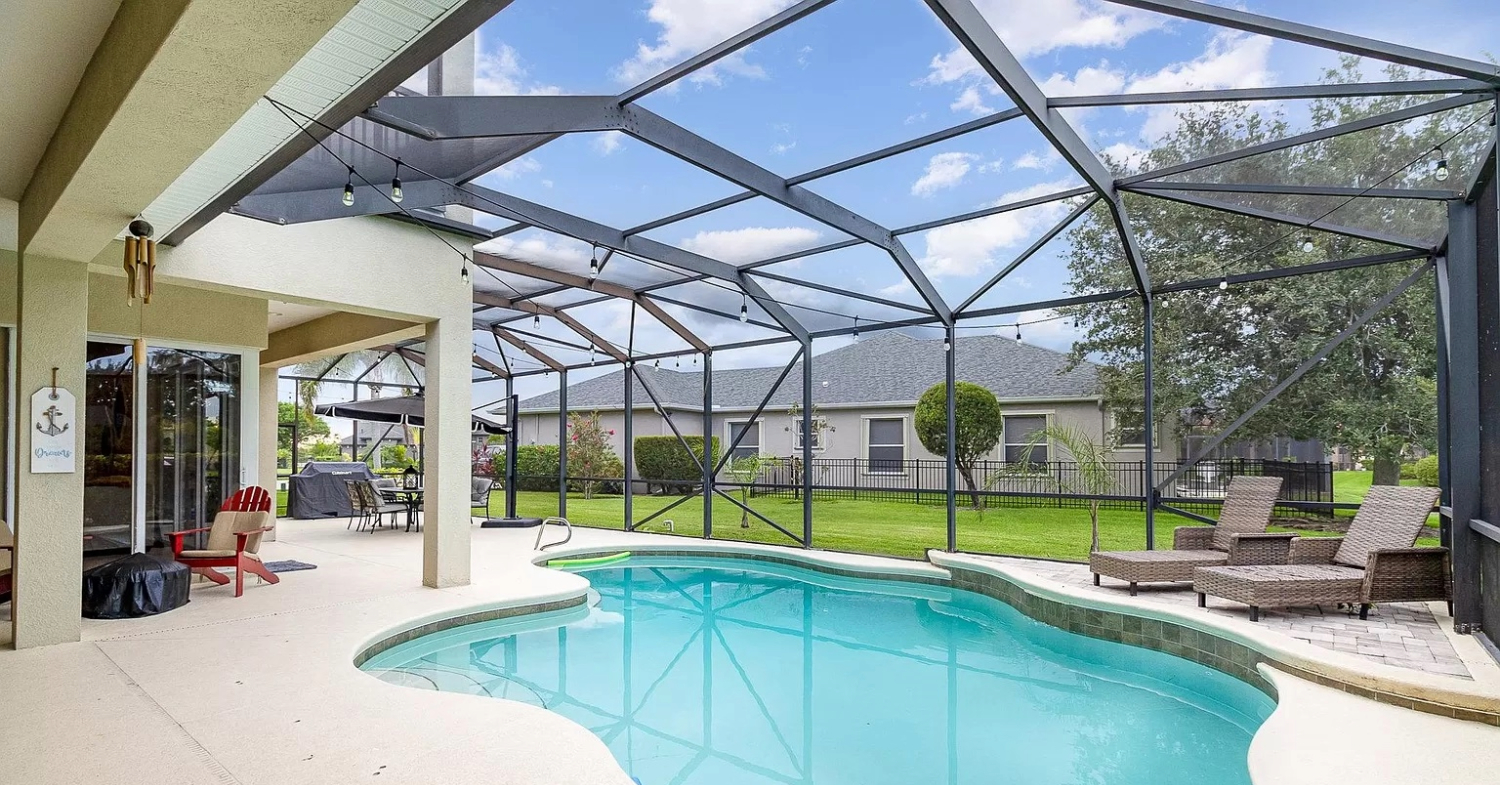
Pool enclosure screen types matter because the screen material controls how your outdoor space feels every day. The aluminum frame gives the enclosure its structure, but the screen affects bugs, airflow, privacy, heat, visibility, pets, storm resistance, and long-term maintenance. In Florida, choosing the wrong screen can mean too much heat, too many insects, poor privacy, or panels that need replacement sooner than expected.
For Hillsborough County homeowners, pool enclosure screen types should be selected with local conditions in mind. Tampa, Brandon, Riverview, Apollo Beach, Ruskin, Sun City Center, Valrico, and nearby areas all deal with strong sun, humidity, afternoon storms, no-see-ums, pets, and hurricane-season weather. This guide explains the main pool enclosure screen types, when each option makes sense, and how Affordable Lanai helps homeowners choose the best screen setup for their pool area.
Quick Answer
The best pool enclosure screen types for Florida homes often include no-see-um screen for small biting insects, solar screen for hot sun-facing panels, pet-resistant screen on lower sections, privacy screen where neighbors overlook the pool, and hurricane-rated screen where storm resistance is a priority. Standard fiberglass is budget-friendly, but many homes benefit from upgraded screen materials.
Why Pool Enclosure Screen Types Matter
For homeowners comparing screen materials, Phifer explains that insect screening can be used for pool enclosures, lanais, screened porches, doors, windows, and other outdoor areas, with options for mosquitoes, no-see-ums, gnats, and other pests. Review Phifer’s insect screening guide before choosing the right screen material for your enclosure.
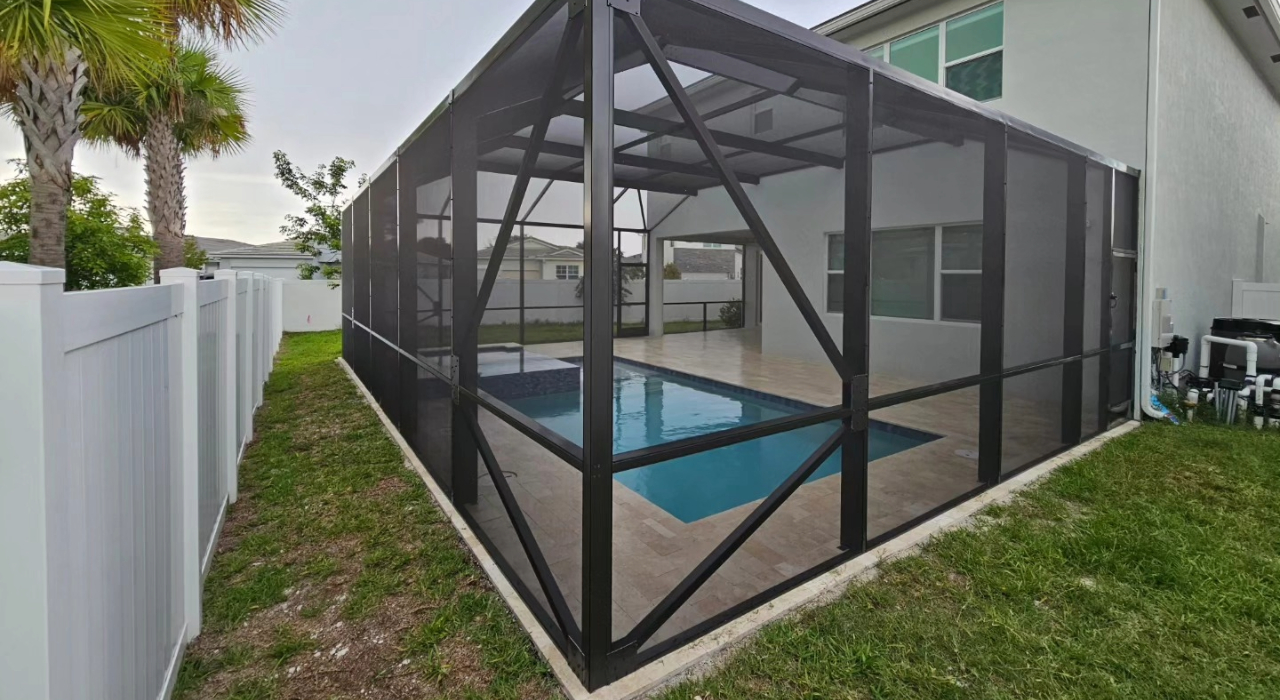
Pool enclosure screen types should be chosen based on how your pool area is used. A family that uses the pool every evening may need better bug protection. A west-facing pool deck may need stronger heat and glare control. A home with dogs may need lower pet-resistant panels. A property near water may need tighter mesh because no-see-ums can pass through standard screen.
Florida weather also affects screen performance. Sun can weaken lower-quality screen over time. Storms can stretch, loosen, or tear panels. Humidity can make cheap materials age faster. That is why pool enclosure screen types should be discussed before installation, not after the enclosure is already built.
A good enclosure should make the pool area more comfortable, not just covered. The right screen can reduce bugs, improve shade, support privacy, keep debris out, and help the space feel easier to use every day. Affordable Lanai installs pool screen enclosures and lanai screen enclosures using screen options selected for Florida conditions.
Standard Fiberglass Screen
Standard fiberglass is one of the most common pool enclosure screen types. It is affordable, flexible, and works well for basic insect protection. It blocks mosquitoes, flies, leaves, and larger debris while still allowing good airflow and visibility.
This option works well for homeowners who want a simple, budget-friendly screen enclosure and do not have major issues with no-see-ums, pets, privacy, or heavy sun exposure. It keeps the enclosure feeling open and bright, which many homeowners like.
The main downside is that standard fiberglass does not block the smallest biting insects. If your home is near water, conservation land, trees, or low-lying areas, no-see-ums may still get inside. In those cases, standard fiberglass may not provide enough protection for daily comfort.
Among pool enclosure screen types, standard fiberglass is often best for general use, lower-budget projects, and areas where airflow is more important than maximum insect control.
No-See-Um Screen
No-see-um screen is one of the most important pool enclosure screen types for Florida homeowners. It uses a tighter mesh designed to block small biting insects that can pass through standard screen. These tiny insects can make a pool area uncomfortable, especially in the evening or after rain.
Homes in Apollo Beach, Ruskin, Tampa Bay-area neighborhoods, wooded communities, and properties near water often benefit from no-see-um screen. If your current enclosure keeps out mosquitoes but you still get tiny biting bugs, this may be the upgrade you need.
The trade-off is airflow. Because the mesh is tighter, less breeze passes through compared with standard fiberglass. For many homeowners, that trade-off is worth it because the pool area becomes much more usable. No-see-um screen is often one of the best pool enclosure screen types for families who want a more dependable bug barrier.
Solar Screen
Solar screen is one of the best pool enclosure screen types for heat, glare, and privacy. It has a denser weave that blocks a large amount of sunlight and UV exposure. In Florida, this can make a major difference on panels that face west or southwest.
A pool area that gets strong afternoon sun can become uncomfortable. Pavers, furniture, cushions, and seating areas can get hot. Solar screen helps reduce glare and heat while also protecting outdoor furniture from fading.
Solar screen also creates daytime privacy. When the outside is brighter than the inside, it becomes harder for neighbors or passersby to see into the pool enclosure. From inside, you can usually still see out, but the view is slightly darker.
The downside is reduced airflow and a darker appearance. That is why solar screen is often used only on sun-facing or neighbor-facing sides. For many homes, solar screen works best when combined with other pool enclosure screen types instead of being used everywhere.
Pet-Resistant Screen
Pet-resistant screen is one of the most practical pool enclosure screen types for homes with dogs or cats. Pets can scratch, push, lean, or jump against lower panels. Standard screen can tear quickly in those areas.
Pet-resistant screen uses a heavier material and stronger weave. It is often installed in the lower panel sections where pet contact is most likely. This protects the most vulnerable areas without making the whole enclosure darker or reducing airflow too much.
This screen is a smart upgrade for families with active dogs, pets that lean on panels, or pool areas where pets run around the deck. It may cost more than standard screen, but it can reduce repair needs over time.
Among pool enclosure screen types, pet-resistant screen is best used strategically. Lower panels usually need it more than upper panels. The result is a stronger enclosure without unnecessary cost on every section.
Aluminum Screen
Aluminum screen is stronger than standard fiberglass and can be useful when durability is a top concern. It is made from woven aluminum wire, giving it more physical strength than many softer screen materials.
This option can work well for panels near trees, areas with more debris, or homeowners who want a tougher screen material. It can resist some types of tearing better than standard screen.
The trade-off is that aluminum screen can dent or crease. If furniture, pool tools, or people press into it, the mark may stay. It can also cost more than standard fiberglass, so it is usually not needed on every panel.
When comparing pool enclosure screen types, aluminum screen is best for select areas where physical strength matters more than flexibility.
Hurricane-Rated Screen
Hurricane-rated screen is one of the pool enclosure screen types homeowners ask about most often during storm season. It is designed to provide stronger resistance against tearing, wind stress, and storm-related damage compared with basic screen.
No screen can make an enclosure storm-proof, but upgraded screen can help reduce damage from common wind events and debris. For homes exposed to stronger winds, hurricane-rated screen may be worth considering.
It is important to understand that screen material is only one part of storm performance. The aluminum frame, anchors, fasteners, engineering, and permit-approved installation all matter. Hurricane-rated screen works best as part of a properly built enclosure system.
For homeowners comparing pool enclosure screen types, hurricane-rated screen is a good option when long-term durability and storm readiness matter more than the lowest upfront cost.
Privacy Screen Panels
Privacy screen is one of the most useful pool enclosure screen types for homes with close neighbors, street exposure, or visible backyard lines. Privacy screen can reduce visibility into the enclosure while still allowing some airflow.
Solar screen is often used as a privacy screen because it blocks heat and visibility at the same time. Solid lower panels can also be used when stronger privacy is needed at seating height. In some designs, privacy screen is combined with landscaping outside the enclosure to create a softer, more natural barrier.
The key is targeted placement. Privacy screen does not usually need to cover every side. Using it only where needed keeps the enclosure open, bright, and comfortable while still solving the privacy issue.
Why Many Homes Need Mixed Screen Types
One of the biggest mistakes homeowners make is choosing one screen for the whole enclosure. In many homes, the best solution is a mix of pool enclosure screen types. Different sides of the enclosure deal with different problems.
The west-facing side may need solar screen. The lower panels may need pet-resistant screen. The neighbor-facing side may need privacy screen. The open-view side may need no-see-um screen. This approach gives better comfort without using the most expensive material everywhere.
Mixing pool enclosure screen types also helps balance airflow, visibility, shade, privacy, and budget. A good installer should ask how you use the pool area before recommending screen material.
Screen Type Comparison
| Screen Type | Best For | Main Benefit | Trade-Off |
|---|---|---|---|
| Standard fiberglass | Basic protection | Good airflow and lower cost | Does not block no-see-ums |
| No-see-um screen | Bug-heavy areas | Blocks tiny biting insects | Reduced airflow |
| Solar screen | Sun-facing panels | Reduces heat, glare, and visibility | Darker appearance |
| Pet-resistant screen | Homes with pets | Stronger lower panels | Higher cost in upgraded areas |
| Hurricane-rated screen | Storm-exposed homes | Better wind and tear resistance | Higher material cost |
How to Choose the Right Screen
Choose pool enclosure screen types based on your biggest problem first. If bugs are the issue, start with no-see-um screen. If heat is the issue, use solar screen on sun-facing panels. If pets are the issue, upgrade lower sections. If privacy is the issue, use solar or privacy screen on exposed sides.
Also think about how the enclosure will feel. Too much dense screen can reduce airflow. Too much privacy screen can make the space darker. Too little upgraded screen may leave the same problems unresolved. The best design balances comfort, function, and cost.
Why Affordable Lanai
Affordable Lanai helps homeowners compare pool enclosure screen types during the planning process. The team reviews sun exposure, insect pressure, pets, privacy needs, storm exposure, and how the family uses the pool area.
Affordable Lanai is powered by American Home Center, License SCC131153480. The company uses US-made materials, handles permits, and offers warranty-backed installation for pool screen enclosures, lanai enclosures, privacy screen options, and related outdoor projects.
To request a quote, visit the Affordable Lanai contact page.
Frequently Asked Questions
What is the most common pool enclosure screen type in Florida?
Standard fiberglass is common because it is affordable and allows good airflow, but many homeowners upgrade to no-see-um screen for better insect protection.
Which pool screen blocks tiny biting insects?
No-see-um screen is designed with a tighter mesh that helps block tiny biting insects that can pass through standard screen.
Can I use more than one screen type?
Yes. Many homes use several pool enclosure screen types, such as solar screen on hot panels and pet-resistant screen on lower panels.
Does solar screen reduce privacy?
Solar screen usually improves daytime privacy because it reduces visibility from outside while also lowering heat and glare.
Is hurricane-rated screen worth it?
It can be worth it for homeowners who want stronger storm-season protection, especially when paired with a properly built and permitted frame.
Conclusion
Pool enclosure screen types should be chosen based on your home, pool location, insects, sun exposure, privacy needs, pets, and storm concerns. Standard fiberglass works for basic use, but no-see-um, solar, pet-resistant, privacy, aluminum, and hurricane-rated options can make the enclosure more comfortable and durable.
Affordable Lanai helps Hillsborough County homeowners choose the right screen materials for Florida conditions. To plan your enclosure, visit the contact page or call (813) 777-5665.