
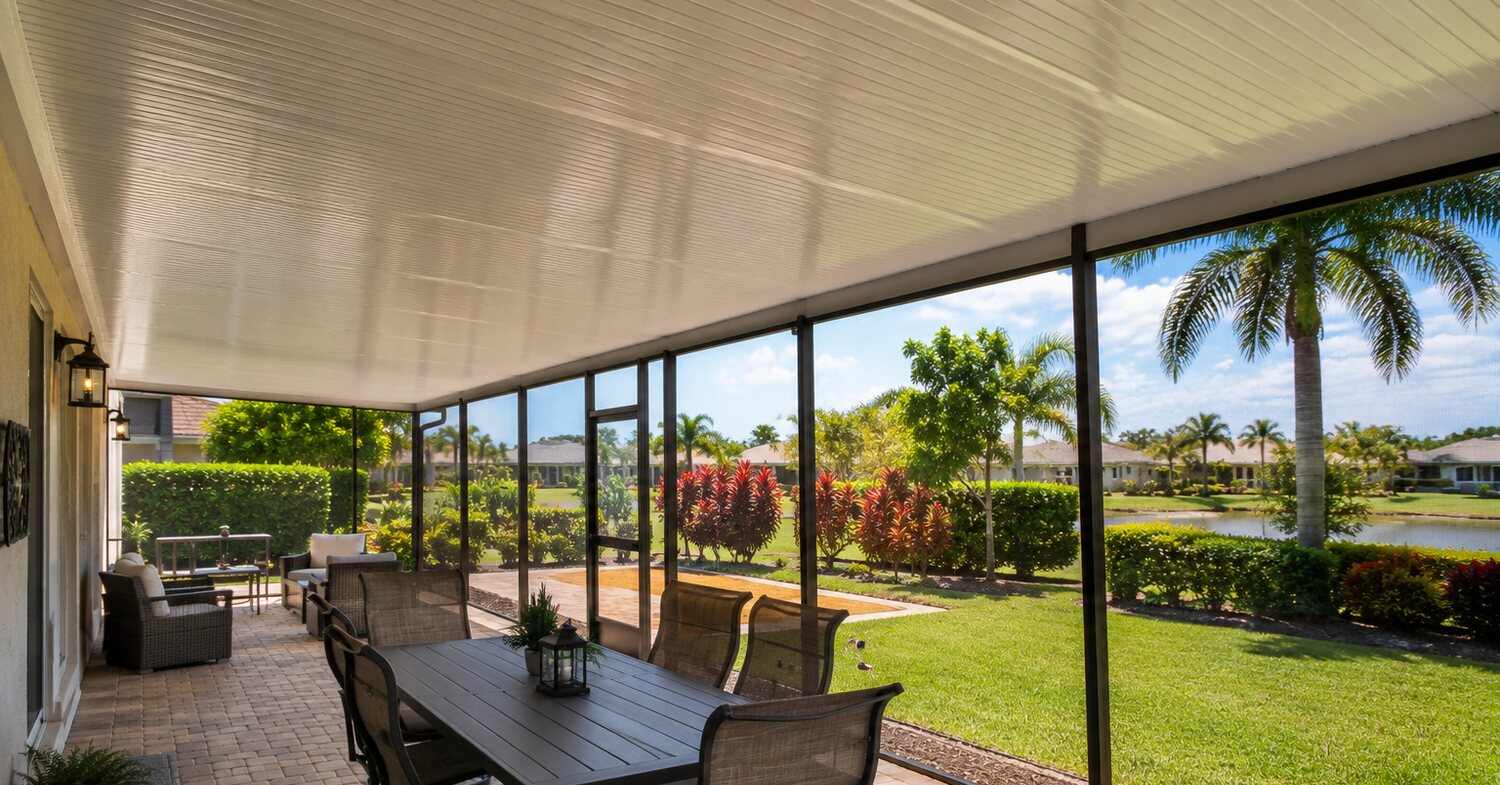
Pan roof vs screen mesh roof is the first real decision most Florida homeowners face once the frame layout is settled. The roof sets how much shade you get, how loud a June storm sounds overhead, and how the space feels at 3pm in August. It also moves the price more than any other line on the drawing.
We install all three roof systems across Hillsborough, Polk and Manatee counties, so we get asked to settle the pan roof vs screen mesh roof argument nearly every week. Below is what each roof does well, where each one falls short, and which homeowner each option actually suits.
Quick answer: In the pan roof vs screen mesh roof comparison, mesh is the most affordable and keeps the space breezy, a solid aluminum pan roof sits mid range with full shade and rain cover, and an insulated composite panel roof costs the most and stays coolest. Lanai enclosures run $30 to $55 per square foot.
Table of Contents
Three Lanai Roofs Florida Homeowners Choose Between
Every lanai starts with the same skeleton: posts, beams and chair rails in 6005-T5 aluminum, a frame that commonly lasts 25 to 30 years on inland sites across Hillsborough and Polk County. What changes from job to job is what goes on top.
Three systems sit on that frame. A screen mesh roof stretches the same fabric overhead that wraps the walls. A solid aluminum pan roof caps the space with interlocking metal panels. An insulated composite panel roof adds a rigid foam core between two aluminum skins. All three can be shaped as a mansard, gable or dome and engineered to the 130 mph design wind speed.
Our page on lanai screen enclosures covers the frame. The roof is where the pan roof vs screen mesh roof question actually lives.
Screen Mesh Roofs: The Most Affordable Choice in Florida
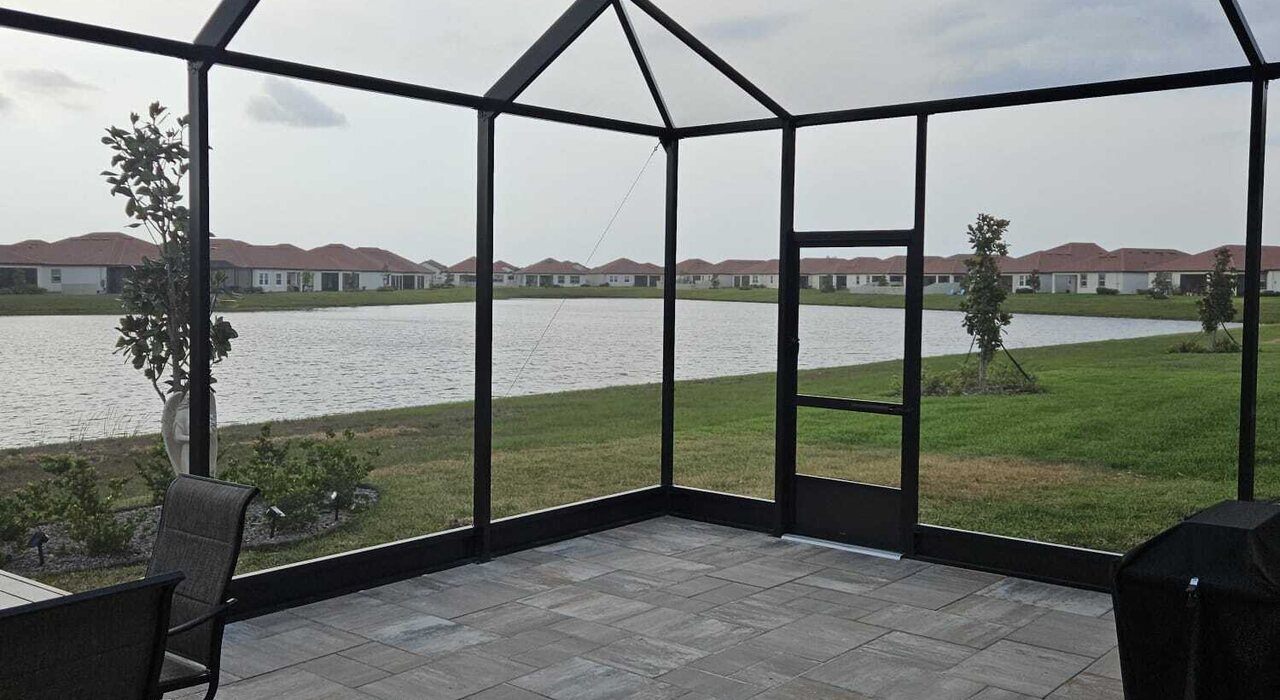
A screen mesh roof Florida homeowners pick most often is also the cheapest way to cover one. It blocks leaves, lizards and insects while breeze passes straight through, and across the 237 sunny days Florida averages each year, that airflow is the point.
Mesh life runs 7 to 15 years, and grade decides where you land.
- Standard fiberglass, usually an 18/14 charcoal weave: 7 to 12 years
- Aluminum mesh in an 18×16 weave: 10 to 15 years
- Vinyl coated polyester pet screen: 15 years and up
- No-see-um and solar grades: 10 to 18 years, blocking 30% to 90% of UV
One grade up costs $0.10 to $0.40 more per square foot. In the pan roof vs screen mesh roof comparison, mesh wins on price and airflow and loses on rain.
Solid Aluminum Pan Roofs: The Mid Range Upgrade
A solid aluminum pan roof swaps mesh for interlocking panels. Rain stays off the table and shade is total rather than dappled. An aluminum roof lanai stays usable during the afternoon storms that roll through from June to September.
Two trade offs come with it. Rain is louder on bare metal, closer to a shed than a shingle roof. An uninsulated pan also absorbs sun, so air below can sit warmer than a breezy screened space.
Panels carry their own load, so the design can open up, and homeowners planning an outdoor kitchen usually land here. Our gallery of lanai enclosure ideas shows how a solid cover changes the pan roof vs screen mesh roof picture.
Insulated Composite Panel Roofs: The Highest Cost Option
An insulated composite panel roof uses the same pan profile with a foam core bonded between two aluminum skins. That core deadens rain noise close to a house roof and slows heat transfer, so the air underneath stays cooler through a Central Florida August.
It is the priciest of the three and earns that money in comfort rather than lifespan. The panels span farther, so a composite lanai roof cuts the beams crossing your view, and the underside takes fans or lighting without extra framing.
Federal guidance on cool roofs explains why reflective, insulated surfaces run cooler. If you plan to sit outside at 2pm in July, this option answers the pan roof vs screen mesh roof question differently than the other two.
Pan Roof vs Screen Mesh Roof on Cost, Comfort and Upkeep
Lanai enclosures run $30 to $55 per square foot, and the roof is one of the biggest movers in that range. Published figures give the shape of it: 20×20 at $13,380, 20×30 at $17,250 and 20×40 at $19,600. Mesh sits low, pan panels mid, composite at the top.
Upkeep splits the same way in the pan roof vs screen mesh roof comparison. Mesh is the consumable layer and gets replaced around year 10 to 12. An aluminum roof lanai has no wear layer and needs washing instead. Maintenance runs $150 to $400 a year and extends service life by 40% to 60%.
Install time barely moves, at 2 to 3 days on site once work starts. Our breakdown of lanai screen enclosure cost in Florida covers the line items behind the pan roof vs screen mesh roof gap.
| Roof | Cost | Shade | Rain noise | Temperature below | Upkeep | Best use |
|---|---|---|---|---|---|---|
| Screen mesh | Lowest | Filtered, 30% to 90% UV | Quietest | Matches outdoor air | Rescreen at year 10 to 12 | Pool decks on a budget |
| Solid aluminum pan | Mid range | Full, no direct sun | Loudest | Warmer on still days | Wash and check hardware | Outdoor kitchens, rainy season |
| Insulated composite | Highest | Full, no direct sun | Quiet | Coolest of the three | Wash and check hardware | Daily midday use |
Want numbers for your actual lanai? Send rough dimensions and a photo and we will price all three roofs on the same footprint at no charge, usually within 12 to 24 hours. Call (813) 777-5665 and we will walk the pan roof vs screen mesh roof math with you.
Permits and Engineering Behind the Pan Roof vs Screen Mesh Roof Decision
Paperwork is where the pan roof vs screen mesh roof choice stops being cosmetic. Every lanai enclosure in Florida needs a permit and an engineering review for wind load at the 130 mph minimum design speed. A solid roof adds dead load and a water shedding surface, so drainage gets studied harder and the space is sometimes classified differently.
Budget $350 to $1,350 for the permit package: engineered plans $200 to $600, permit fee $150 to $400 and inspections $50 to $100. County review takes 10 to 20 business days and the full process runs 5 to 8 weeks. Two inspections are mandatory, framing and final, booked 24 to 48 hours ahead.
Building without a permit carries fines of $500 to $1,000 per day, so settle the pan roof vs screen mesh roof question before the plans go in. Homeowners weighing glass instead should read our screen room and sunroom comparison for Tampa.
Not sure which roof fits your budget? We build all three across Tampa, Brandon, Riverview, Lakeland and the rest of Central Florida, and every quote is free. Send your dimensions through our contact page and we will price the pan roof vs screen mesh roof options side by side.
Frequently Asked Questions
What is a pan roof on a lanai?
A pan roof is a solid lanai cover built from interlocking aluminum panels rather than mesh. The panels shed rain completely and block direct sun, and they carry their own structural load, which lets a design use fewer beams across the ceiling.
Is a screen mesh roof enough to keep rain out?
No. A screen mesh roof Florida homeowners choose for shade slows rainfall, but water still passes through, so furniture underneath gets damp in a storm. Mesh is picked for shade, insect control and airflow rather than weather protection.
How much cooler is an insulated composite panel roof?
The foam core between the aluminum skins slows heat transfer, so air below stays cooler than under a bare metal panel that absorbed sun all afternoon. A composite lanai roof also cuts rain noise noticeably compared with an uninsulated pan.
Does a solid lanai roof need a permit in Florida?
Yes. Every lanai enclosure in Florida requires a permit and an engineered wind load review. A solid roof adds dead load and a water shedding surface, so drainage and structural details receive closer scrutiny than an open mesh roof does.
How long does each lanai roof last?
Screen mesh lasts 7 to 15 years depending on grade and is usually replaced around year 10 to 12. Aluminum framing and solid panels commonly last 25 to 30 years at inland Florida sites with routine washing and hardware checks.
Making the Pan Roof vs Screen Mesh Roof Call With Confidence
Start with how you plan to use the space rather than with the price tag. If you want breeze and the lowest number, mesh wins the pan roof vs screen mesh roof argument. If you want the lanai usable in the rain, a pan roof earns its place. Composite is for daily midday use.
We have built enclosures in Central Florida for 15 years and completed more than 1,000 projects under contractor license SCC131153480. Every install carries a 10-year warranty on materials and a 1-year warranty on labor, quotes are free and land within 12 to 24 hours, financing runs through HFS, and our Build and Price estimator gives a starting figure any time.
Let’s settle it on your patio. Call (813) 777-5665 or email [email protected] and we will measure the space, confirm the permit path and hand you fixed numbers for the pan roof vs screen mesh roof options.